
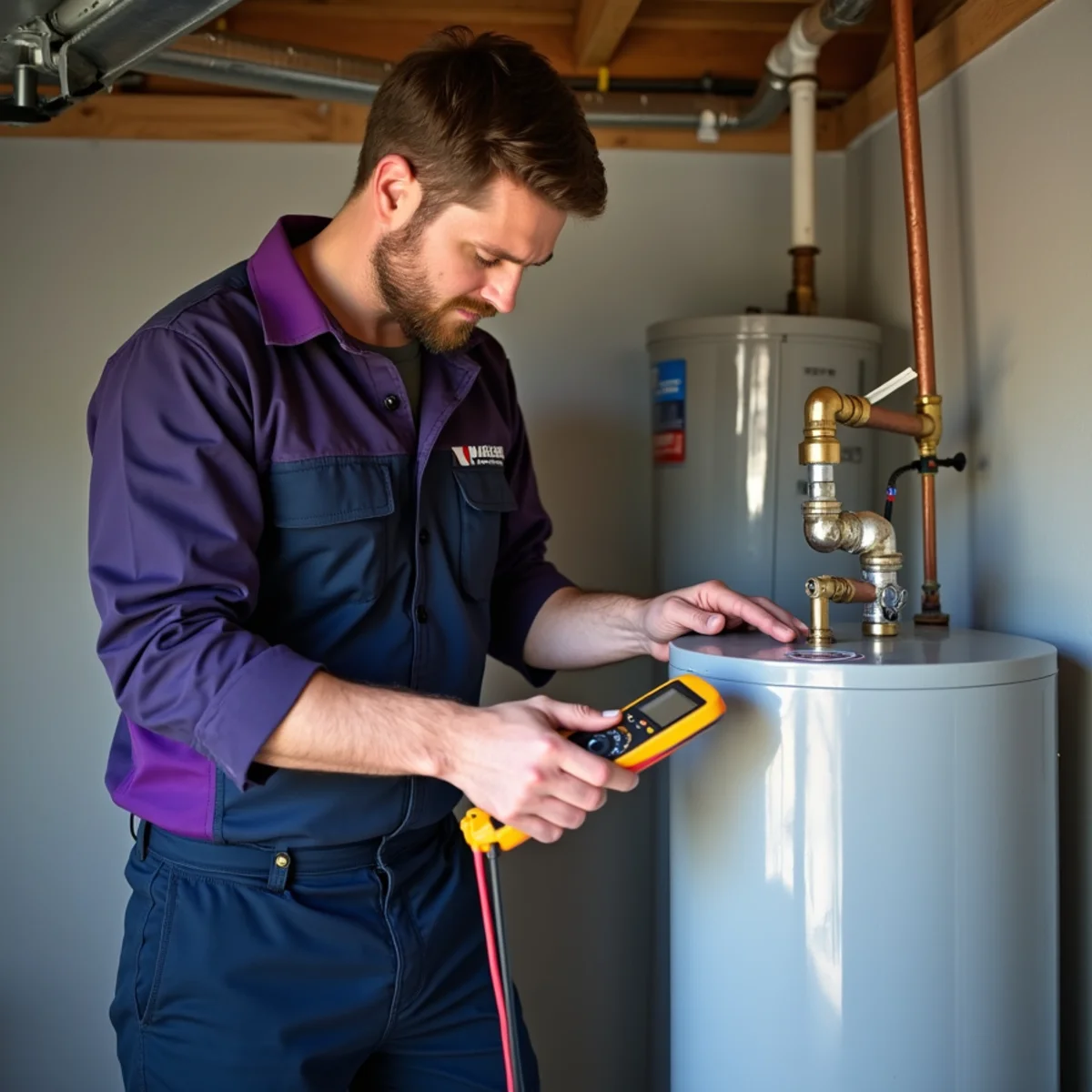
Cold showers have a way of arriving on the worst mornings. When a water heater quits in Grapevine, the question is usually repair or replace — and the honest answer depends on the unit’s age, what failed, and how hard our water has been on it. We diagnose the actual fault before recommending anything, because a $200 thermocouple repair and a full replacement are very different conversations.
Tarrant County’s hard water is the quiet killer of water heaters here. Scale builds on elements and at the bottom of tanks, insulating the burner, driving up gas bills, and shortening the unit’s life. We factor that in — sometimes a flush and a fresh anode rod buys years; sometimes a rusted-through tank means it is time. Either way you get straight options, not a sales pitch.
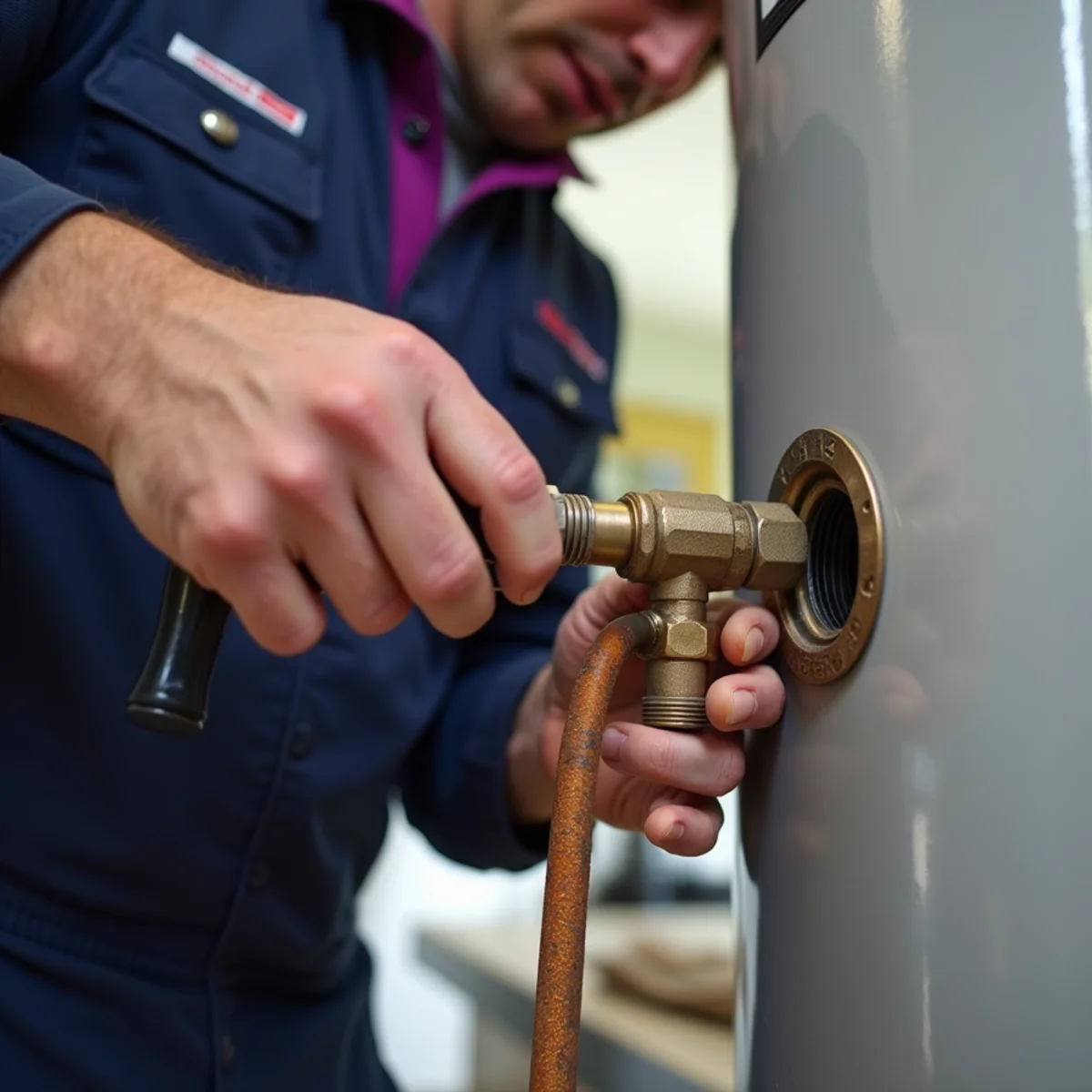
Common water heater problems we fix
- No hot water, or water that never gets hot enough
- Rusty, cloudy, or metallic-smelling hot water
- Popping or rumbling sounds from sediment in the tank
- Water pooling around the base of the heater
- The pilot light or burner that will not stay lit
- Hot water that runs out far faster than it used to
What’s Included with Water Heater Repair & Installation
Every water heater repair & installation job in Grapevine comes with the same standard — real diagnosis, honest options, and workmanship we stand behind. Here’s what you get:
- Full diagnosis: thermostat, element or burner, thermocouple, anode rod, and tank integrity
- Straight repair-or-replace advice with the unit’s age pulled from its serial number
- Correctly sized replacements matched to your household’s hot-water demand
- Code-compliant install with expansion tank, drain pan, and proper venting
- Old unit haul-away and permit coordination where the city requires it
- A flush schedule or softener recommendation to fight the hard water that shortens tank life
Our Process
- 1
Diagnose the fault
We test the thermostat, heating element or burner, thermocouple, anode rod, and tank integrity to find the real cause.
- 2
Repair or recommend replacement
If a repair makes sense, we do it. If the tank is rusted through or past its service life, we explain why and show you options.
- 3
Size and install correctly
New installs are sized to your household’s demand, set to code, and fitted with a proper expansion tank and drain pan.
- 4
Test and protect
We verify temperature, check for leaks, and can add a flush schedule or softener to fight the hard-water scale that killed the last one.
Repair or replace? How we decide with you
A good rule of thumb: if the unit is under eight years old and the failure is a serviceable part, repair it. If it is past ten years, leaking from the tank, and fighting years of hard-water scale, replacement usually costs less over the next few years than repeated repairs. We show you the unit’s age from its serial number and let you make the call with real numbers.
What Affects the Cost
Whether you repair or replace, the cost comes down to the unit, your home’s setup, and bringing older installs up to current code.
Repair vs. replacement
A part like an element or thermocouple is a modest repair; a full tank or tankless replacement is a larger, longer-lived investment.
Tank size and fuel type
Gas and electric units, and 40- vs. 50- vs. 75-gallon tanks, carry different equipment and labor costs.
Code upgrades
Older installs often need an expansion tank, new gas flex, a drain pan, or updated venting to pass inspection.
Location and access
An attic or tight-closet heater is more labor to swap than a garage unit with clear access.
How Hard Water Decides Repair vs. Replace
Most water-heater failures in this area trace back to one culprit: scale. Grapevine’s moderately hard water — roughly 117–135 ppm as calcium carbonate in the city’s 2024 report — drops minerals onto the bottom of a tank and across electric elements every time the burner fires. That scale insulates the heat source, so the unit works harder, runs louder (the popping and rumbling you hear), and wears out years early.
When we open a service call, the age on the serial plate and the failure mode tell us which way to steer you. A serviceable part — thermostat, element, thermocouple, or a spent anode rod — on a tank under eight years old is worth repairing. A tank leaking from the shell cannot be patched and only gets worse. Past ten years, fighting scale, with a rusted tank, replacement usually costs less over the next few years than repeated repairs. We show you the numbers and let you decide, and we size any replacement to your real hot-water demand instead of defaulting to whatever came out.
Frequently Asked Questions
With our hard water, a standard tank heater typically lasts 8–12 years — often on the shorter end without regular flushing or a softener. Tankless units can last 20 years with descaling. Annual maintenance meaningfully extends both.