
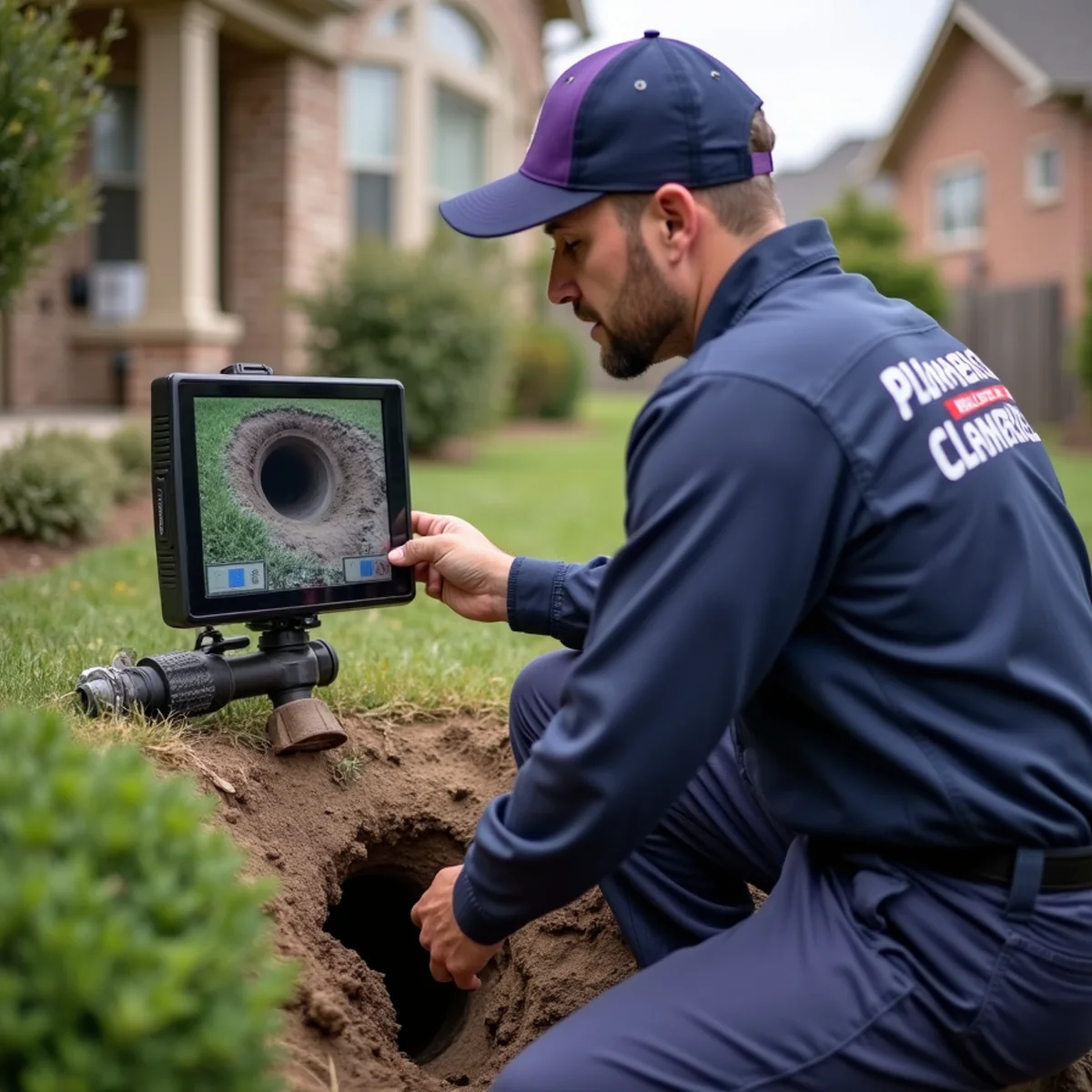
A failing sewer line rarely announces itself politely. It shows up as recurring backups, soggy patches in the yard, or a smell you cannot place. In Grapevine and the mid-cities, the usual culprits are age and soil: decades-old clay and cast-iron laterals cracked by expanding Blackland Prairie soil, then invaded by roots at every joint. We start every sewer job with a camera so you see the real problem before spending a dollar on repair.
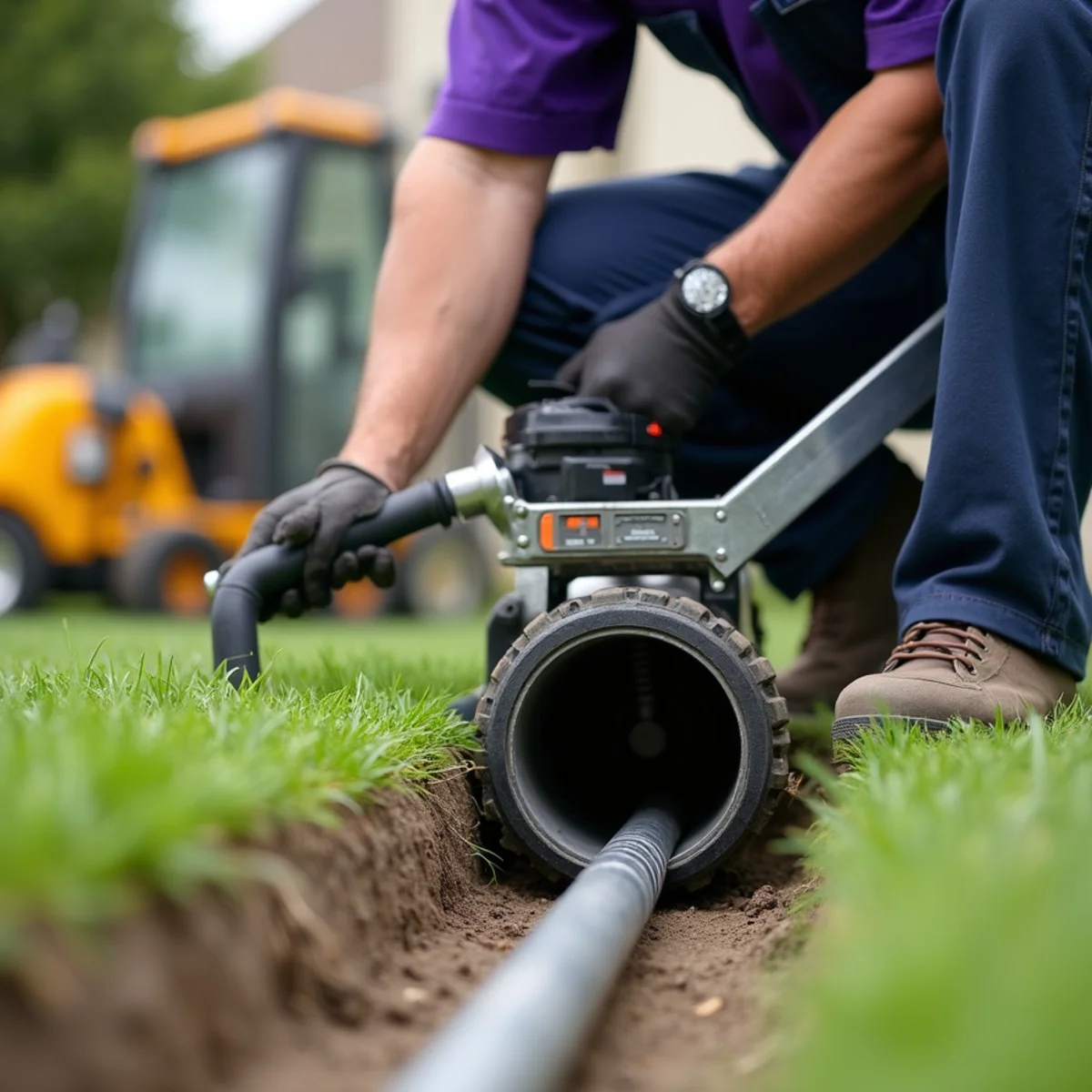
Not every sewer line needs a backhoe across the front lawn. Where the pipe is intact enough, trenchless methods — pipe bursting or cured-in-place lining — let us replace or reline the lateral through small access points. When a line has collapsed or bellied badly, targeted excavation is the honest answer. We walk you through both, with the camera footage on screen, so the recommendation is one you can see for yourself.
Warning signs of a damaged sewer line
- Multiple drains backing up at the same time
- Sewage odor inside the home or over the yard
- Unusually lush, soggy, or sunken patches in the lawn
- Gurgling toilets and slow drains throughout the house
- Repeated main-line clogs that keep coming back
- Foundation or slab movement near the sewer run
What’s Included with Sewer Line Repair & Replacement
Every sewer line repair & replacement job in Grapevine comes with the same standard — real diagnosis, honest options, and workmanship we stand behind. Here’s what you get:
- A sewer camera inspection you can watch, locating the exact break, belly, or root intrusion
- Line jetting first when debris blocks the camera, then a clean re-inspection
- Trenchless options — pipe bursting or cured-in-place lining — where the line supports them
- Targeted excavation only where a collapse or severe belly requires it
- City permits pulled and inspections coordinated for the municipality you’re in
- A post-repair camera pass confirming proper flow and grade, plus clean site restoration
Our Process
- 1
Camera inspection
We send a sewer camera down the line and locate the exact depth and position of the break, belly, or root intrusion.
- 2
Clear and assess
If roots or debris block the view, we jet the line first, then re-camera to judge the pipe’s true condition.
- 3
Trenchless or targeted dig
We recommend pipe bursting, lining, or a spot excavation based on what the camera shows — not a one-size template.
- 4
Repair, test, restore
After repair we camera the line again to confirm proper flow and grade, then restore the work area cleanly.
What Affects the Cost
Sewer work spans a wide range because the fix depends entirely on what the camera finds — but you will never approve a repair you have not seen on screen.
Length and depth of the run
A short shallow lateral is far less work than a long line buried deep under a driveway or mature landscaping.
Trenchless vs. excavation
Lining and pipe bursting cost more per foot but save your yard and hardscape; open-cut is cheaper where access is easy.
What lies above the line
A pipe running under a slab, driveway, or tree adds restoration cost that a line under open lawn does not.
Permits and city taps
Municipal permits and connection points in Grapevine and neighboring cities factor into the total.
The Camera Comes First, Always
No one should approve sewer work they have not seen, and no honest plumber should recommend it blind. We start every sewer job by putting a camera down the line, because the footage is the difference between a targeted spot repair and needlessly replacing a whole lateral. The camera shows exactly where the defect sits, how deep it is, and what kind of failure it is — a root ball at a joint, a bellied section holding water, a crack, or a full collapse.
That evidence also drives the method. Where the existing pipe path is intact enough, pipe bursting pulls a new line through it and cured-in-place lining forms a new pipe inside the old one — both spare your lawn, driveway, and mature trees. Where a section has collapsed or bellied badly, a targeted dig is the honest answer, and we will say so. Grapevine’s expansive clay is usually behind the damage in the first place: it swells and shrinks with the seasons and shears rigid pipe at its weakest points, which is why sister neighborhoods on the same soil tend to see the same failures a few years apart.
Frequently Asked Questions
Trenchless methods repair or replace a sewer line through small access points instead of digging up the whole run. Pipe bursting pulls a new pipe through the old path; cured-in-place lining creates a new pipe inside the old one. Both minimize damage to your yard.