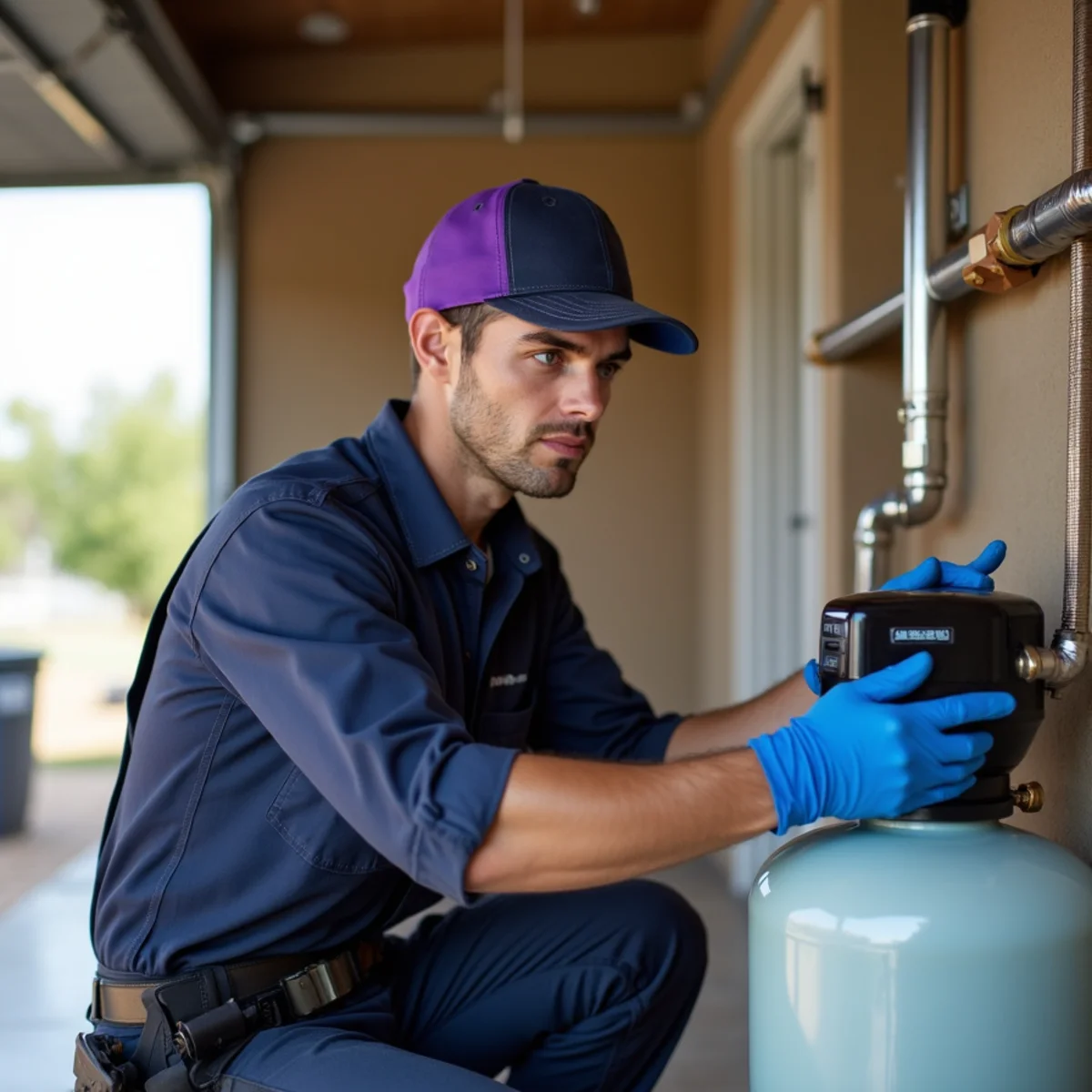
If your glasses come out spotted, your soap will not lather, and your water heater is failing early, hard water is the reason. Tarrant County water runs 8 to 12 grains per gallon of hardness, and all those dissolved minerals precipitate as scale — inside your pipes, on your fixtures, across your heating elements, and in every water-using appliance. A properly sized softener removes the minerals before they can build up, and it pays for itself in the equipment it protects.
We do not sell one-size-fits-all boxes. We look at your household size, water usage, and hardness level to size a softener that regenerates efficiently, and we can pair it with whole-home filtration if you want to address chlorine taste, sediment, or other water-quality concerns. The result is softer water on every tap, longer-lived appliances, and an end to the scale that quietly shortens the life of everything it touches.
Signs hard water is costing you
- White scale on faucets, showerheads, and glassware
- Soap and shampoo that will not lather well
- Dry skin and hair after showering
- A water heater that fails earlier than it should
- Spots and film on dishes out of the dishwasher
- Reduced flow from scaled-up fixtures over time
What’s Included with Water Softener & Filtration
Every water softener & filtration job in Grapevine comes with the same standard — real diagnosis, honest options, and workmanship we stand behind. Here’s what you get:
- A water test confirming your hardness level and any taste, odor, or sediment concerns
- A softener sized to your household’s usage so it regenerates efficiently
- Optional whole-home carbon or sediment filtration paired with the softener
- A clean, code-compliant install at the main line with a bypass valve
- Programming and a walkthrough of exactly how to maintain the system
- Verified soft water at the taps before we leave
Our Process
- 1
Test your water
We confirm your hardness level and discuss any taste, odor, or sediment concerns you want filtration to address.
- 2
Size the system
We size the softener to your household’s usage and hardness so it regenerates efficiently — not too small, not oversized.
- 3
Install cleanly
We install the softener (and any filtration) at the main line with a bypass, to code, with a neat drain and setup.
- 4
Set and explain
We program the system, verify soft water at the taps, and show you exactly how to maintain it.
What Affects the Cost
System cost depends on the type and capacity you choose and how your home’s plumbing is configured at the point of installation.
Softener type and size
Capacity is matched to your household; larger homes and higher usage need bigger, more capable systems.
Added filtration
Whole-home carbon or sediment filtration for taste and clarity adds to a softener-only setup.
Install location and plumbing
A garage main line with a nearby drain is simpler than a tight or remote installation point.
Loop and bypass work
Homes without an existing soft-water loop may need plumbing added to route the system properly.
What Hard Water Is Really Costing You
Hard water does not announce itself with a single failure; it charges a slow tax on the whole house. Grapevine’s supply runs roughly 117–135 ppm as calcium carbonate, and those dissolved minerals precipitate as scale everywhere water sits or heats — inside supply lines, across water-heater elements, on aerators and showerheads, and in every appliance that touches water. The visible signs are spotted glassware and film on the dishes; the expensive ones are a water heater that fails years early and fixtures that clog and drip.
A properly sized softener removes the calcium and magnesium before they can build up, and the return shows up in the equipment it protects rather than on a label. Sizing matters: too small and it regenerates constantly and wastes salt, too large and it cycles inefficiently, so we match it to your household’s real usage and hardness. If your concern is also taste, odor, or sediment, that is a filtration question rather than a softening one, and we can pair whole-home carbon or sediment filtration with the softener so you solve both in one clean install at the main line.
Frequently Asked Questions
It typically runs 8 to 12 grains per gallon — firmly in the hard range. That mineral content is what leaves scale on fixtures and shortens the life of water heaters and appliances, which a softener prevents.