
Prevention · By Grapevine Heritage Plumbing
Ask a Grapevine homeowner why their water heater died at eight years old when the label promised twelve, and most have no idea. The usual culprit is not a bad unit or bad luck — it is the water itself. Tarrant County runs hard water, commonly in the 8 to 12 grains-per-gallon range, and all that dissolved calcium and magnesium spends every day working against the one appliance in your home that heats it.
Hard water and water heaters are natural enemies, because heat is exactly what drives dissolved minerals to drop out of the water and cement themselves to metal. Understanding that process — and it is not complicated — tells you why your heater ages faster here than the brochure suggests, and more importantly, what you can do to add years back. This is the same explanation we give customers before they spend money replacing a heater the hard water is going to eat again.
What 'hard water' actually means here
Water hardness measures the dissolved calcium and magnesium your water carries, expressed in grains per gallon. Anything above about 7 grains is considered hard, and Tarrant County water commonly lands in the 8 to 12 range — solidly hard. Those minerals are harmless to drink, but they do not stay dissolved forever.
When hard water is heated, its chemistry shifts and the minerals precipitate — they come out of solution and deposit as solid scale and sediment. Your water heater is where water gets hottest and sits longest, which makes it the single worst-affected appliance in a hard-water home. Everything below follows from that one fact.
How scale and sediment kill a heater
In a tank water heater, precipitated minerals sink and pile up as a layer of sediment on the bottom, right above the burner or over the lower heating element. That layer acts like insulation, forcing the heater to burn longer and hotter to push heat up through it into the water. You get higher energy bills and a heater working overtime.
That sediment also traps pockets of water against the hot tank bottom, which flash to steam and cause the popping and rumbling sounds so many hard-water homeowners recognize. The trapped heat and constant thermal stress cook the tank's protective lining and accelerate corrosion. Meanwhile the sediment eats into the tank's usable volume, so you run out of hot water sooner. In a tankless unit, the same minerals scale the narrow heat exchanger passages, choking flow and throwing efficiency and error codes. Either way, the appliance wears out years early.
The signs your heater is scaling up
Hard-water damage announces itself if you know the signals. Popping, rumbling, or crackling noises when the heater runs are trapped water boiling under a sediment layer — one of the most reliable early signs. Water that runs out faster than it used to means sediment has stolen tank capacity. Rising energy bills with no change in habits point to the burner fighting through insulating scale.
You may also notice reduced hot-water flow, discolored or rusty water indicating the tank's interior is corroding, or moisture and rust appearing around the base of the unit as the tank finally fails. If your heater is doing several of these at once and it is not that old, hard water is almost certainly the reason.
Fix number one: flush the tank regularly
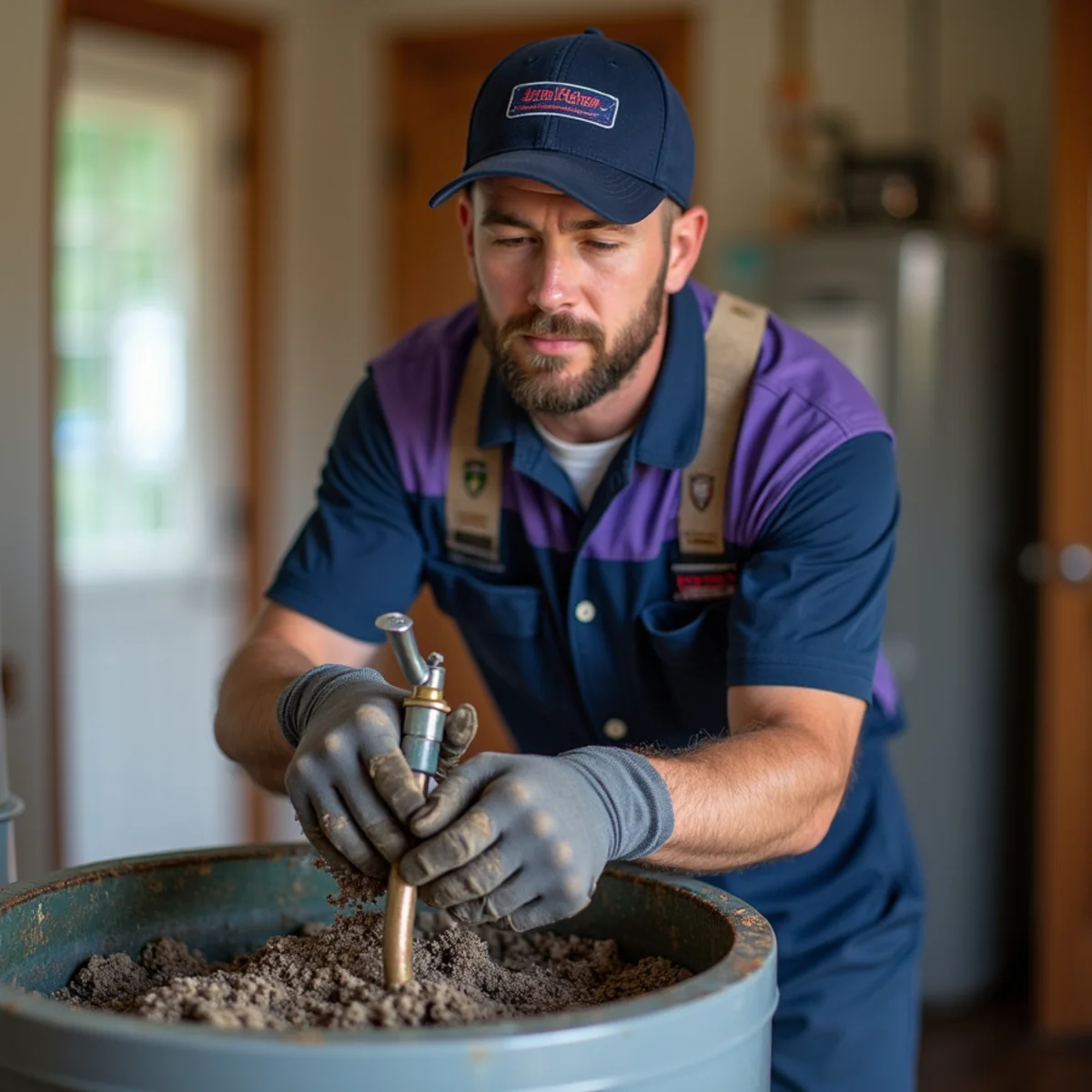
The most important maintenance step for a tank heater in our water is an annual flush. Draining and flushing the tank removes the accumulated sediment before it can insulate the burner, steal capacity, and cook the lining. Done every year, this single habit can meaningfully extend the life of a heater in hard water and keep it running efficiently.
Skipping the flush is how heaters here die early. Sediment that is flushed out yearly never gets the chance to build into the thick, hardened layer that destroys a tank. If your heater has never been flushed and it is a few years old, do not assume it is too late — but do have it looked at, because a very heavy sediment load sometimes needs professional attention to clear safely.
Fix number two: mind the anode rod
Every tank water heater contains a sacrificial anode rod — a metal rod designed to corrode in place of the steel tank, drawing the corrosive action to itself and sparing the tank walls. In hard water, that rod gets used up faster. Once it is depleted, the corrosion it was absorbing turns on the tank itself, and the clock to failure speeds up.
Checking the anode rod periodically and replacing it when it is spent is one of the cheapest ways to add years to a heater's life. A rod costs a fraction of a new water heater, and swapping a depleted one before the tank starts corroding is exactly the kind of preventive step that pays for itself many times over in Tarrant County.
The real fix: soften the water
Flushing and anode rods manage the damage; a water softener stops it at the source. A softener removes the calcium and magnesium before the water ever reaches your heater, which means little to no new scale forms in the tank, the burner stays clean, and the heater runs closer to the lifespan it was actually designed for.
And the benefit does not stop at the water heater. Softened water protects your entire plumbing system — supply lines, fixtures, faucets, dishwasher, and washing machine all last longer and work better without hard-water scale attacking them. It also cuts soap scum, spotting on glassware, and dry skin. For a Tarrant County home, a softener is one of the highest-return plumbing investments there is, because it protects everything downstream at once rather than one appliance at a time.
Your hard-water heater protection plan
Put these steps in place and your next heater will not die early like the last one:
1. Flush the tank once a year to clear sediment before it builds up.
2. Check the anode rod every couple of years and replace it when it is spent.
3. Listen for popping or rumbling — early warning that sediment is accumulating.
4. Watch for capacity loss and rising bills as signs scale is winning.
5. Install a water softener to stop new scale at the source and protect the whole house.
6. If you go tankless, commit to annual descaling and add isolation valves to make it quick.
How Grapevine Heritage Plumbing Can Help
Frequently Asked Questions
In our 8 to 12 grain water, an unmaintained heater often fails years before its rated lifespan because sediment insulates the burner and accelerates tank corrosion. Regular flushing, anode rod care, and especially a water softener can bring the life expectancy much closer to what the manufacturer promised.
Your water heater is not failing early because it is a bad unit — it is failing early because Tarrant County's hard water scales it up from the inside every single day. Flushing the tank, minding the anode rod, and above all softening the water are the proven ways to stop that damage and get the years back that the hard water has been quietly stealing.
If your heater is rumbling, running short, or you just want to protect a new one from meeting the same fate, Grapevine Heritage Plumbing can flush it, service it, or set you up with a softener that guards your whole home. Call us at (831) 290-4327 and stop replacing water heaters before their time.