Local-Regulatory · By Grapevine Heritage Plumbing
Most homeowners first hear the word 'backflow' when a postcard shows up from the city saying their annual test is due, and the immediate reaction is confusion — what test, for what device, and why. If that is you, the short version is this: the backflow assembly on your irrigation system or your business's water supply is a safety device that keeps contaminated water from being pulled back into the public drinking water, and the state of Texas requires that it be tested regularly by a certified tester to prove it still works.
It is a real public-health rule, not a money grab. Backflow is what happens when water flows the wrong direction through the system — back toward the city main instead of toward your faucets. Under the right conditions, that can siphon fertilizer and pesticide from a sprinkler system, or chemicals and process water from a commercial setup, straight into the water everyone on your street drinks.
This guide explains who needs backflow testing, how often Texas and local cities require it, what the test actually involves, and what happens if the device fails. We are a licensed Texas plumbing shop that does this work, so we will keep it straight and practical.
What Backflow Is and Why It Matters
Your property connects to the public water main under pressure, and water normally flows one way — from the main into your property. Backflow is the reverse. It is caused by one of two conditions. Backsiphonage happens when pressure in the main suddenly drops — a water-main break, heavy firefighting draw, or a nearby hydrant flush — and the suction pulls water backward through your lines. Backpressure happens when pressure on your side rises above the main and pushes your water back toward it.
Why that is dangerous depends on what your water can touch. An irrigation system's pipes sit in soil treated with fertilizer and weed killer, and sprinkler heads are routinely submerged in puddles. A commercial kitchen, car wash, or anything with chemical dosing has its own hazards. A backflow prevention assembly physically stops that reverse flow and protects the shared drinking water. Testing confirms the valve's internal checks and relief still seal, because they wear out, foul with our hard-water scale, and fail silently.
Who Needs Backflow Testing in Texas?
The practical answer for most readers: if you have an in-ground lawn irrigation system, you almost certainly have a backflow assembly, and your city almost certainly requires it to be tested. In Texas, lawn irrigation systems are required to have an approved backflow prevention device, and testing of that device is part of staying compliant.
Beyond irrigation, cross-connection and backflow rules apply broadly to commercial and industrial properties, and to many specific setups: fire sprinkler systems, buildings with boilers, properties with their own well tied into city water, car washes, laundromats, medical and dental facilities, restaurants, and anything with chemicals connected to the water supply. Cities classify these by hazard level and require the appropriate assembly and testing.
Residential homes without irrigation and without special connections typically do not have a testable assembly. The most common reason a Grapevine homeowner gets a backflow notice is the sprinkler system. If you are unsure whether you have a device, look near where your irrigation line taps off the water supply — it is usually a brass assembly with two test cocks and shutoff valves, often above ground near the house or in a box.
How Often Is Testing Required?
The standard across Texas cities is an annual test — once a year — and most jurisdictions, including those in the DFW area, send a reminder when yours is coming due. Annual testing is the baseline because these assemblies have rubber seals and moving checks that degrade over time, and a device can pass one year and fail the next.
Some situations call for testing more often than annually. A newly installed assembly must be tested at installation before it is put into service. High-hazard commercial facilities may be on a more frequent schedule set by the city. And any time an assembly is repaired or rebuilt, it must be retested to confirm the repair holds.
The exact cadence, deadlines, and who you submit results to vary by city, so confirm the specifics with your water provider for your address. The city of Grapevine, like its neighbors, administers a cross-connection control program and will tell you when your test is due and where the report goes. The one constant you can plan around: expect an annual test on any irrigation or commercial assembly.
Who Can Legally Perform the Test?
This is not a DIY item, and no general handyman can sign off on it. In Texas, a backflow assembly must be tested by a licensed professional holding the proper credential — a Backflow Prevention Assembly Tester (BPAT) certification, typically held by licensed plumbers or irrigators who have completed the required training.
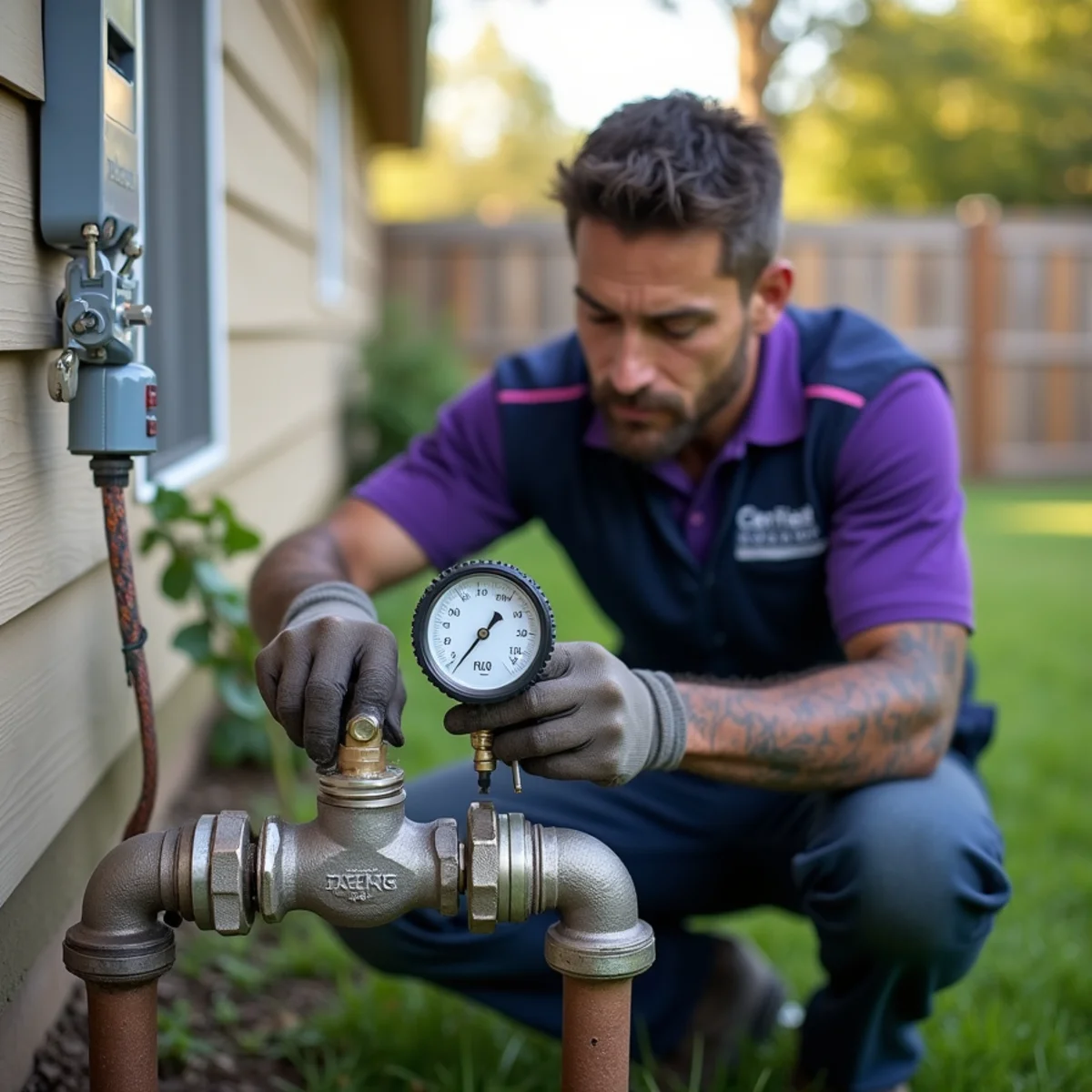
The tester uses a calibrated differential pressure gauge that must itself be kept in calibration for the results to be valid. When the test passes, the tester completes an official report and submits it to the water purveyor, with a copy for your records. The city accepts results only from a properly certified tester with calibrated equipment, which is why the postcard tells you to hire one.
When you hire a tester, it is fair to ask for their certification and confirm they will file the report with the city for you. A good tester handles that paperwork as part of the job so you are not left chasing the submission.
What Happens During the Test
The test is quick and non-destructive, usually 20 to 30 minutes for a typical residential assembly. Here is what to expect:
1. The tester locates your assembly and identifies the type — commonly a double-check valve assembly or a reduced-pressure-zone (RPZ) assembly on irrigation, depending on the hazard level.
2. The water to the system is briefly shut off at the assembly's valves, so your irrigation will be offline for the duration.
3. The tester connects a calibrated differential pressure gauge to the test cocks on the assembly.
4. Each internal check valve and, on an RPZ, the relief valve is tested in turn to confirm it holds pressure and seals in the correct direction.
5. The readings are recorded. If everything seals properly, the assembly passes.
6. The tester restores water to the system and completes the official report, filing it with the city and giving you a copy.
You do not need to do anything but provide access to the assembly. There is no digging and nothing is left disturbed — a passing test simply documents that your existing device still does its job.
What If the Assembly Fails?
A failed test is not an emergency, but it does start a clock. It means an internal component — a check valve, a seal, a relief valve — is worn, fouled, or stuck and no longer reliably stopping reverse flow. The assembly needs to be repaired, rebuilt, or in some cases replaced, and then retested to confirm the fix before the report can be submitted as passing.
Our hard Tarrant County water is often the reason. Mineral scale builds up on the small internal checks and springs and keeps them from seating cleanly, which is why an assembly that has gone years without service frequently fails. Many assemblies can be rebuilt with a repair kit rather than replaced, the more economical path when the body is sound.
Cities generally give you a window to get a failed assembly repaired and retested, so address it promptly rather than letting the deadline lapse. We handle the full loop — test, repair or rebuild if it fails, retest, and file the passing report — so a failure does not turn into a scramble.
How Grapevine Heritage Plumbing Can Help
Frequently Asked Questions
If you have an in-ground irrigation system in Texas, almost certainly yes. State rules require an approved backflow device on lawn irrigation, and cities require it to be tested, typically once a year. The backflow notice most Grapevine homeowners receive is tied to their sprinkler system. Homes without irrigation or special connections usually have no testable assembly.
Backflow testing comes down to a simple purpose: proving that the valve protecting the public water supply still works. If you have irrigation or run a business, plan on an annual test by a certified tester, keep your passing report on file, and treat a failure as a prompt repair rather than a crisis. It is a small, routine step that keeps your water — and your neighbors' — safe.
When your Grapevine backflow notice arrives, or you are not sure whether your system needs testing, call Grapevine Heritage Plumbing at (831) 290-4327. Our certified testers will test the assembly, handle any repair, file the report with the city, and keep you compliant without the hassle.