
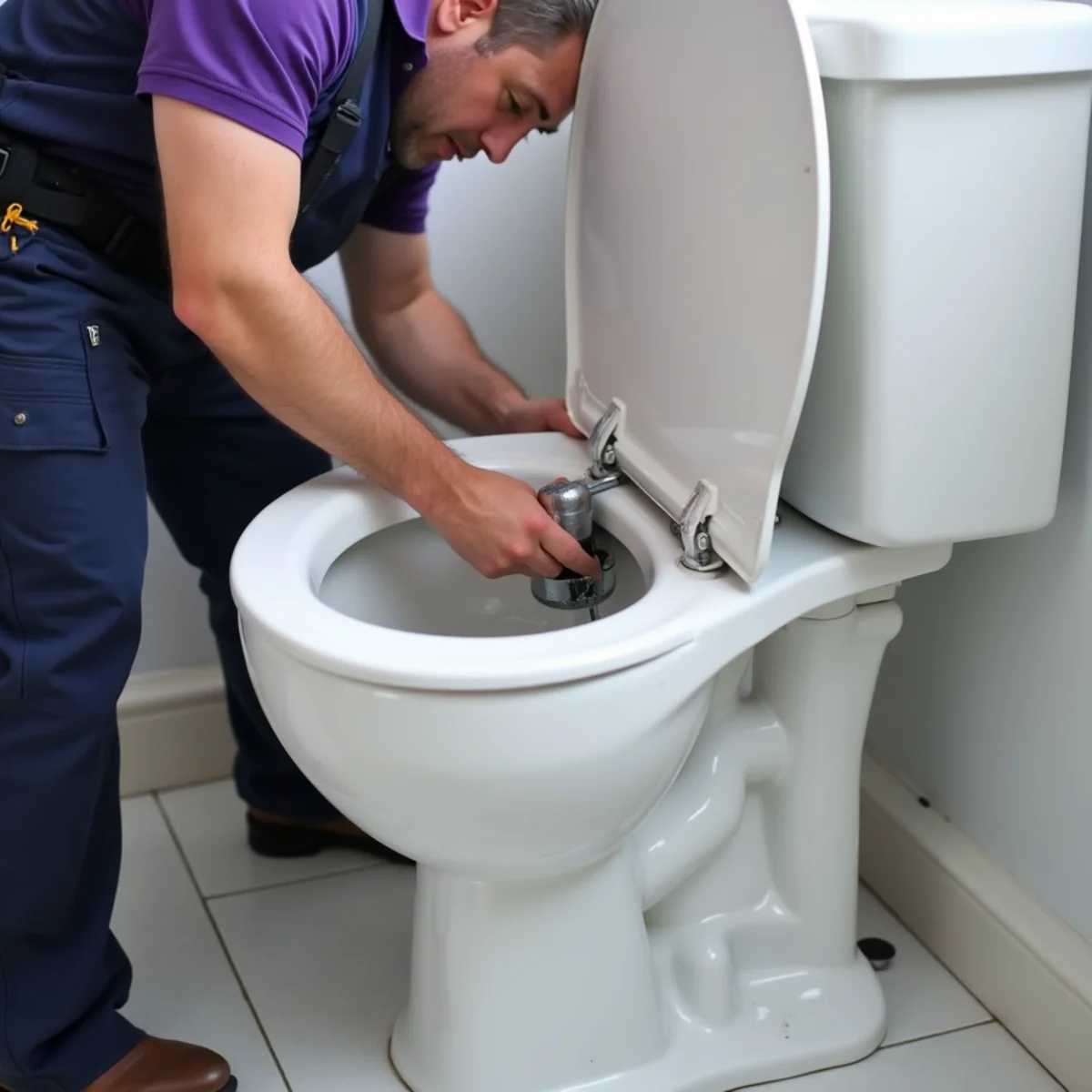
How-To · By Grapevine Heritage Plumbing
That faint, endless hiss of water from the bathroom is more than an annoyance. A toilet that keeps running is quietly sending clean, treated water straight down the drain — a steady leak that can add hundreds of gallons a day and show up as a startling jump on your next water bill. We have had Euless homeowners call about a 'mystery' high bill that turned out to be one running toilet upstairs nobody used much.
The encouraging part is that the vast majority of running toilets are caused by one of a small handful of worn parts inside the tank, and nearly all of them are inexpensive and fixable without a plumber. The tank mechanism looks busy, but it is really just a valve that fills the tank and a valve that lets water into the bowl, with a float telling the first one when to stop. Once you understand those three players, diagnosing a running toilet becomes straightforward. Lift the lid and let us walk through it.
First, understand what's happening in the tank
When you flush, the flapper at the bottom of the tank lifts and lets the stored water rush down into the bowl. As the tank empties, the float drops, which opens the fill valve to refill the tank. When the water rises back to the set level, the float closes the fill valve and everything goes quiet until the next flush. That is the whole cycle.
A toilet 'keeps running' when something breaks that cycle — either water keeps leaking out of the tank so the fill valve never stops trying to refill it, or the fill valve itself does not shut off, or the water level is set so high it spills into the overflow tube endlessly. Figuring out which one you have is the key to a quick fix. Take the lid off the tank, set it somewhere safe, and watch what the water is doing.
Cause 1: a worn or misaligned flapper
The flapper is the most common offender by a wide margin. It is the rubber or silicone seal at the bottom of the tank, and over time it hardens, warps, or gets coated with mineral buildup — and in our hard Tarrant County water, that mineral crust forms faster than in softer regions. A flapper that no longer seals lets water seep continuously from the tank into the bowl, so the fill valve keeps topping the tank off. That is the classic 'runs for a few seconds every little while' or steady trickle.
Easy test: put a few drops of food coloring in the tank and wait fifteen minutes without flushing. If colored water appears in the bowl, the flapper is leaking. Also check that the chain connecting the flapper to the flush lever is not too short or tangled, which can hold the flapper slightly open. A flapper is a few dollars and swaps out in minutes, making it the first thing to check and the cheapest thing to fix.
Cause 2: the fill valve won't shut off
If water is running constantly and you can hear the fill valve hissing, the fill valve (the tall assembly on the left side of the tank) may be failing to close. Sediment and mineral scale from hard water can keep it from sealing, or the internal seal simply wears out with age. Sometimes you will see water trickling into the overflow tube — the open vertical pipe in the middle of the tank — because the valve never fully stops.
Before replacing it, check the float and water level, because a too-high level fools the system (next section). If the level is correct and the valve still runs, the fill valve is worn. A modern replacement fill valve is inexpensive, comes with clear instructions, and installs with simple hand tools in under half an hour for most people. It is one of the more satisfying DIY plumbing repairs there is.
Cause 3: the water level and float are set wrong
The water in the tank is supposed to stop rising about an inch below the top of the overflow tube. If the float is set too high, the tank fills past the top of that tube and water pours down it continuously — the toilet runs forever even though nothing is technically broken. This is a simple adjustment, not a repair.
On newer toilets with a column-style float that rides on the fill valve, there is usually a clip or a screw you turn to lower the float and thus the shut-off level. On older toilets with a ball float on an arm, you can gently bend the arm down or turn the adjustment screw so the valve shuts off sooner. Lower the level until it sits comfortably below the overflow tube, then flush and watch it refill to confirm it stops in the right place.
Cause 4: problems with the overflow tube or flush valve
Less often, the running water traces to the overflow tube or the larger flush-valve assembly the flapper seats against. If the flush valve seat is cracked, pitted, or crusted with mineral deposits, even a brand-new flapper cannot seal against it, and you will chase a leak that keeps coming back no matter how many flappers you try. Run a finger around the seat and feel for roughness or buildup.
A cracked overflow tube or a flush valve that is deteriorating generally means replacing the flush-valve assembly, which involves removing the tank from the bowl. That is a bigger job than a flapper or fill valve, and it is a reasonable point to call a plumber — especially on an older toilet where it may be worth weighing a repair against simply replacing a tired fixture. We can tell you honestly which makes more sense.
Step-by-step: fix most running toilets yourself
Here is the sequence we would follow, cheapest and easiest first:
1. Take off the tank lid and watch the tank as it sits — is water trickling into the overflow tube, or is the level fine but the bowl keeps refilling?
2. Do the food-coloring test: dye in the tank, wait fifteen minutes, check the bowl. Color in the bowl means a leaking flapper.
3. If the flapper is the issue, shut off the supply valve at the wall, flush to empty the tank, unclip the old flapper, and snap in a matching new one. Check the chain has a little slack.
4. If the water level is too high, adjust the float down so the water stops about an inch below the top of the overflow tube.
5. If the fill valve still hisses and runs with the level correct, shut off the supply, drain the tank, and replace the fill valve following the kit instructions.
6. Feel the flush-valve seat for cracks or heavy mineral buildup — if the flapper cannot seal against a damaged seat, that assembly needs replacement.
7. Turn the water back on, let the tank refill, and watch a full cycle to confirm it shuts off and stays quiet.
How Grapevine Heritage Plumbing Can Help
Frequently Asked Questions
A lot — a continuously running toilet can waste hundreds of gallons a day, which is why a single running toilet often explains a mysteriously high water bill. Because the water is clean and treated, it is pure waste going down the drain. That is why it is worth fixing promptly even though the repair itself is usually cheap.
A running toilet sounds like a plumbing headache but is usually a five-minute, five-dollar fix once you know whether the flapper, the fill valve, or the water level is to blame. Start with the food-coloring test, work from the cheapest part up, and most Euless-area homeowners can stop the running and the waste the same afternoon.
If you have swapped the easy parts and it still will not quit, or the flush valve itself is cracked and the tank needs to come off, do not keep pouring water down the drain. Call Grapevine Heritage Plumbing at (831) 290-4327 and we will get it sealed up right — or tell you straight when a tired old fixture is better replaced than repaired.