
Diagnostic · By Grapevine Heritage Plumbing
Few household annoyances wear on you like weak water pressure. The shower that barely rinses the shampoo out, the sink that takes forever to fill a pot, the washer that seems to run twice as long — it is the kind of daily friction that makes a house feel like it is working against you. And because the water is hidden in the walls and underground, the cause is rarely obvious from the faucet.
The good news is that low water pressure comes from a fairly short list of causes, and working through them in order usually pinpoints the problem fast. Some are simple enough to fix yourself in a few minutes; others — especially the ones involving old galvanized pipe or a buried water line — call for a licensed plumber and sometimes real repair work. The first and most useful question to ask is whether the weak pressure affects your whole house or just one fixture, because that single answer cuts the list of suspects roughly in half. Let us diagnose it together.
One fixture or the whole house? Start here
This is the diagnostic fork that matters most. Walk around and test several faucets, showers, and the tub at different points in the house. If the weak pressure is isolated to a single fixture while everything else is strong, your problem is local — a clogged aerator, a partially closed valve, or a bad cartridge at that one spot. Those are the easy, cheap fixes.
If the pressure is weak everywhere, the cause is upstream — somewhere between the city main and the point where your plumbing branches out. That points to the pressure-reducing valve, the main shut-off, scaled or corroded pipes, a water line problem, or the city supply itself. Whole-house low pressure is the more serious category, but it is still very diagnosable. Knowing which bucket you are in tells you where to spend your attention.
The quick, single-fixture fixes
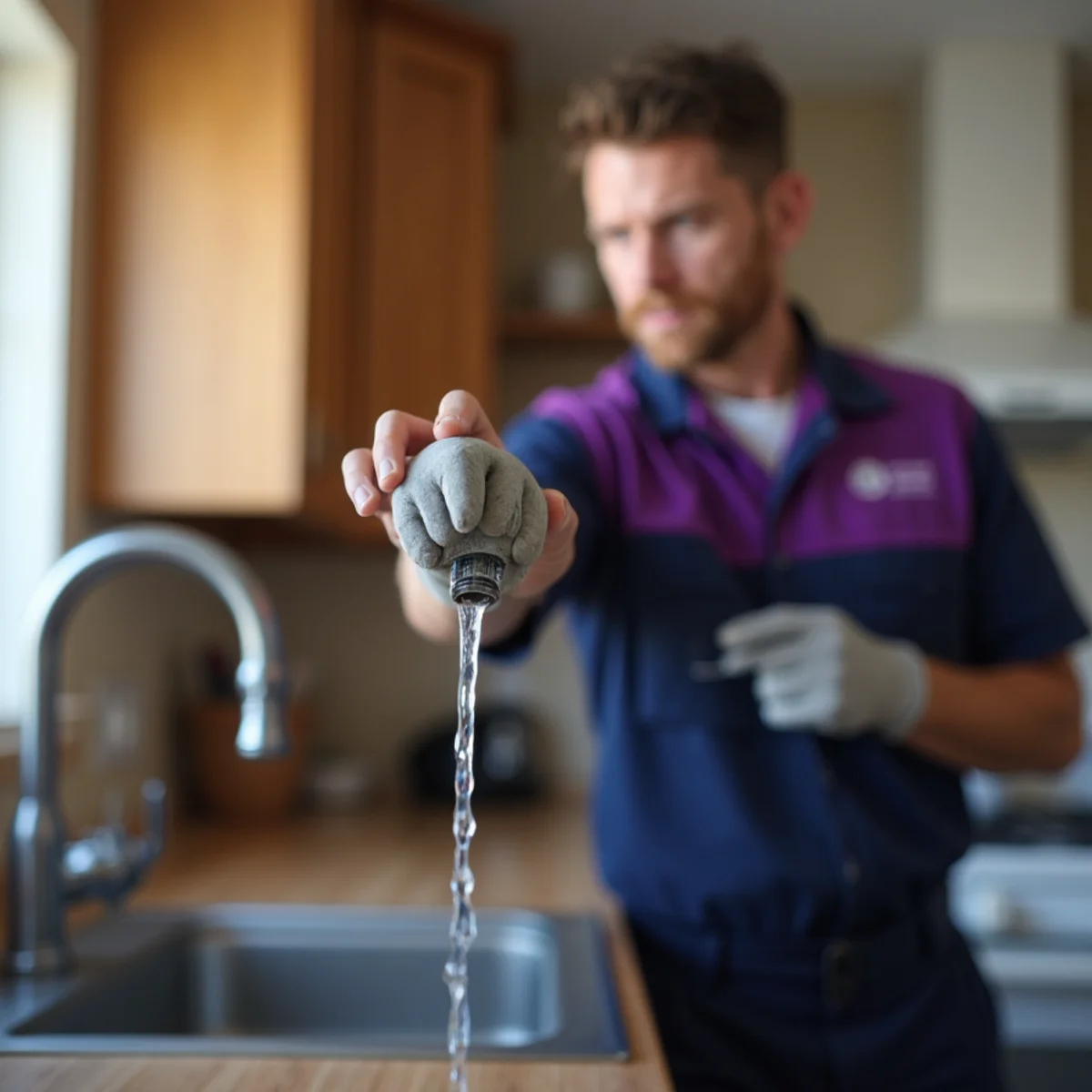
If only one fixture is weak, start at the fixture. The aerator — the little screen at the tip of a faucet — clogs with mineral scale and debris, and in our hard Tarrant County water it clogs faster than most places. Unscrew it by hand or with pliers wrapped in tape, soak it in vinegar to dissolve the mineral buildup, rinse, and reinstall. This alone restores a startling number of 'weak faucet' complaints.
Showerheads scale up the same way; a vinegar soak clears the jets. Also check that the small shut-off valves under the sink or behind the toilet are fully open — a valve someone bumped half closed will choke that fixture. If a single faucet or shower is weak on both hot and cold even after cleaning the aerator, the internal cartridge or valve may be worn, which is an inexpensive part swap. These are all reasonable DIY jobs.
A failing pressure-reducing valve (PRV)
Many Grapevine-area homes have a pressure-reducing valve where the city line enters the house. Its job is to knock the municipal pressure down to a safe, comfortable level for your home's plumbing. These valves have internal parts that wear out, typically after many years, and when a PRV starts failing it often fails toward low pressure — strangling the flow to the whole house.
A failing PRV is one of the most common reasons for sudden, house-wide pressure loss with no other explanation. The telltale sign is weak pressure everywhere that came on gradually or appeared without any other change. A PRV can also fail the other direction and send dangerously high pressure into your lines, which stresses pipes, fixtures, and your water heater. Testing and replacing a PRV is a plumber's job — it involves adjusting or swapping the valve and verifying the resulting pressure is in the safe range. If your home has a PRV and the whole house went weak, this is near the top of the suspect list.
Scaled, corroded, or galvanized pipes
If your home is older — think the character houses near downtown Grapevine or any home still on its original mid-century plumbing — the pipes themselves may be the problem. Galvanized steel supply lines corrode and scale from the inside over decades, the interior passage slowly choking down until it is a fraction of its original diameter. The result is chronically weak pressure that no aerator cleaning or valve adjustment will fix, because the restriction is the pipe itself.
Hard water accelerates this everywhere, not just in galvanized pipe. Mineral scale builds on the inside of lines and especially at fittings and valves, gradually reducing flow throughout the system. When we see whole-house pressure that has declined slowly over years in an older home, and the water sometimes runs rusty or discolored, scaled or corroded galvanized pipe is very often the answer. The real fix is repiping the affected runs with modern materials, which restores pressure for good rather than chasing it fixture by fixture.
Leaks, the main valve, and the city supply
A significant hidden leak — including a slab leak, which our expansive Blackland Prairie clay makes all too common — bleeds pressure out of the system before it reaches your taps. If low pressure shows up alongside a higher-than-usual water bill, the sound of running water when everything is off, or a warm spot on the floor, suspect a leak and have it investigated. Leak detection equipment can pinpoint it without tearing up the house guessing.
Also check the obvious: a main shut-off valve that is not fully open will throttle the whole house, and these sometimes get left partway closed after work is done. Finally, the problem may not be your home at all. If your pressure dropped suddenly everywhere, call a neighbor or the city — a water main break, a utility repair, or work on the municipal system can temporarily lower pressure for a whole street. That rules out a house problem before you spend a dime chasing one.
A step-by-step way to diagnose it yourself
Before calling anyone, work through this and you will often know the answer — or at least hand your plumber a big head start:
1. Test several fixtures around the house. Note whether the weak pressure is one fixture or everywhere.
2. If it is one fixture, clean its aerator or showerhead in vinegar and confirm its shut-off valves are fully open.
3. If it is the whole house, confirm your main shut-off valve is fully open — it may have been left partway closed.
4. Check whether it is weak on hot, cold, or both. Hot-only weakness points toward the water heater or its lines; both sides points upstream.
5. Look for leak clues: a high water bill, running-water sounds with everything off, or a warm or damp floor spot.
6. Ask a neighbor whether their pressure is low too, which would point to a city-side issue rather than your home.
7. If the whole house is weak with no leak signs and no city issue, suspect the PRV or scaled pipes — both jobs for a licensed plumber.
When to bring in a licensed plumber
Cleaning aerators, opening valves, and ruling out a city problem are all safe homeowner steps. Beyond that, the common whole-house causes — a failing pressure-reducing valve, corroded galvanized pipe, or a hidden leak under the slab — need professional diagnosis and often real repair work. Guessing and replacing parts at random on these gets expensive fast.
A plumber can measure your actual pressure with a gauge, test the PRV, use leak-detection gear to find a buried leak without demolition, and camera or inspect pipe to confirm whether scaling is the restriction. That diagnosis is what turns 'the pressure is bad' into a specific, fixable problem with a clear price. If you have worked through the quick checks and the pressure is still weak across the house, that is the point to call rather than keep chasing it.
How Grapevine Heritage Plumbing Can Help
Frequently Asked Questions
Sudden house-wide low pressure most often means a failing pressure-reducing valve, a main shut-off left partly closed, a significant hidden leak, or a city-side issue like a main break. Check that your main valve is fully open and ask a neighbor whether theirs dropped too. If neither explains it, a plumber should test the PRV and check for leaks.
Low water pressure feels mysterious, but it answers to logic: isolate whether it is one fixture or the whole house, work from the cheap fixes up, and the cause usually reveals itself. A clogged aerator is a five-minute job; a failing PRV, corroded galvanized pipe, or a buried leak is where a licensed plumber earns the call and gives you pressure that actually lasts.
If you have worked through the quick checks and your Bedford-area home is still delivering weak, frustrating flow, let us measure it, test the valve, and find the real restriction. Call Grapevine Heritage Plumbing at (831) 290-4327 and we will get your pressure back where it belongs.