Actionable · By Grapevine Heritage Plumbing
A flooded bathroom is deceptively serious. It looks like a mopping job, but water on a bathroom floor does not stay on the floor — it runs under the vanity, wicks up the drywall, seeps into the subfloor, and finds the gap around the toilet flange, where it can travel to rooms and ceilings you would never expect. What you do in the first 24 hours largely determines whether this is a quick cleanup or a mold-remediation project.
The good news is that the first-day playbook is straightforward, and speed matters more than perfection. Mold can begin to establish itself within roughly 24 to 48 hours in our humid North Texas climate, so the clock that starts when the water spreads is the clock that matters most.
Here is a realistic, hour-by-hour approach — from the moment you find the water through getting the room dried out and calling in a plumber to fix whatever caused it.
Hour Zero: Stop the Water Source
First, figure out where the water is coming from and stop it. For an overflowing toilet, take the lid off the tank and push the rubber flapper down to seal it, then close the shutoff valve at the base of the toilet by turning it clockwise. For an overflowing tub or sink, turn off the faucet and open the drain. For a supply-line leak under a fixture, close the local shutoff valve or the main.
If you cannot find or turn a local valve, go straight to the main water shutoff for the house — at the meter by the street or where the line enters the home. Stopping the flow is non-negotiable and comes before cleanup, documentation, or anything else. Everything after this is damage control on water that is already down.
Hour One: Protect Yourself and the Area
Consider what kind of water you are dealing with. Clean water from a supply line or an overflowing tub is low-risk. Water from a toilet overflow that includes waste, or any backup from a drain, is contaminated — wear rubber gloves and boots, keep kids and pets out, and wash up thoroughly afterward.
If the water is anywhere near outlets, a plugged-in space heater, or other electrical devices, cut power to the room at the breaker before you step into it — but only if you can reach the panel without standing in water. Then move anything portable out of the room: bath mats, towels, trash cans, and especially anything stored under the sink, which is often the first casualty.
Hours One to Six: Extract the Standing Water
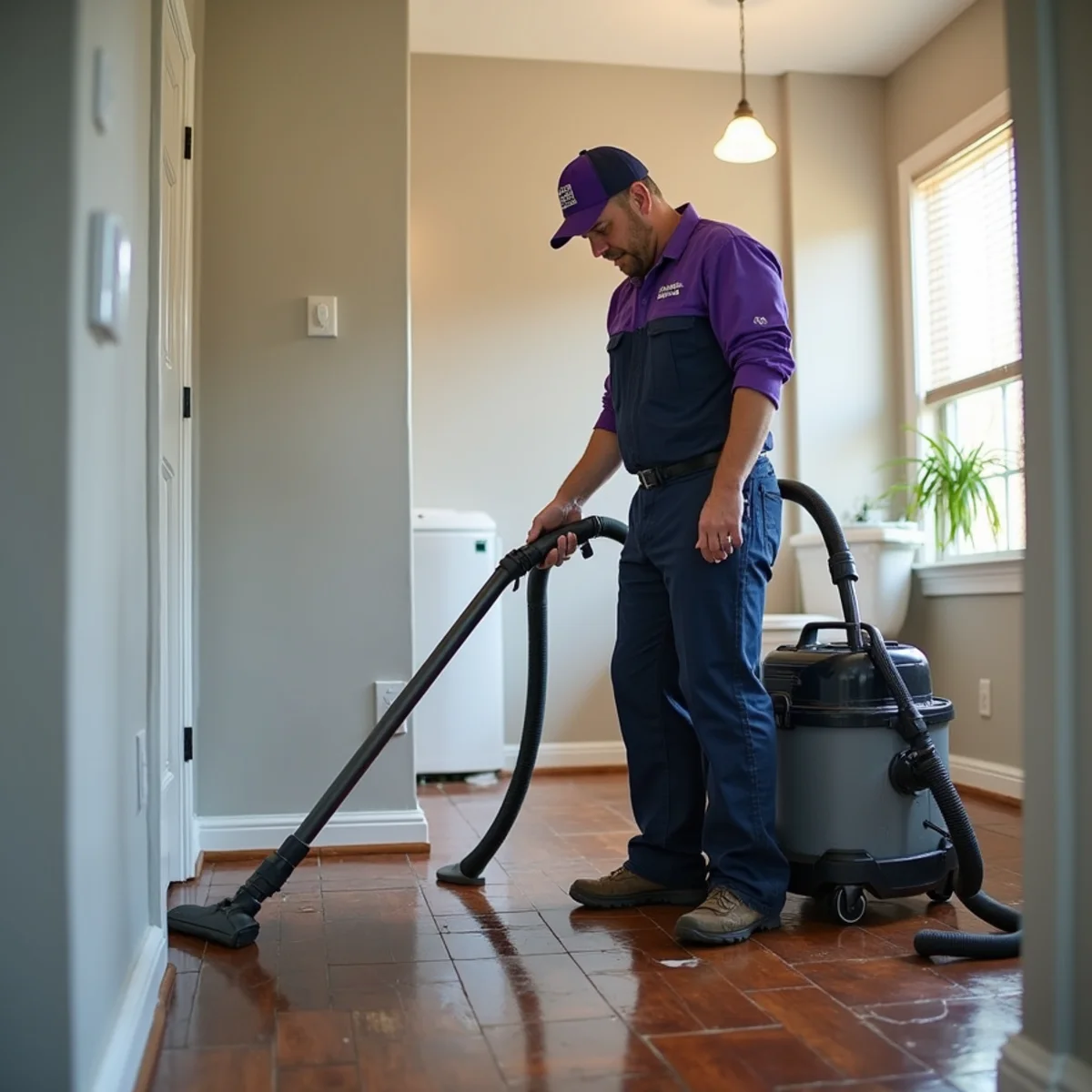
Get the standing water up as fast as you can. A wet-dry shop vac is the best home tool for this; failing that, use towels, a mop and bucket, and a squeegee to push water toward a spot you can vacuum or sop up. The goal is to remove surface water before it has more time to soak into the subfloor and wick up the walls.
Pay special attention to the base of the toilet, the seam where the floor meets the vanity and tub, and any transition to carpet in an adjoining room — water follows those paths. Pull up a corner of any wet bath mat or rug and get it out of the room to dry separately or discard. The more water you physically remove now, the less your fans and dehumidifier have to fight later.
Hours Two to Twenty-Four: Dry Aggressively
Drying is where the mold battle is won or lost, and North Texas humidity is working against you, so be aggressive. Open the bathroom door and any window, and set up as much airflow as you can — box fans or a stand fan pointed at the wet floor and the base of the walls, running continuously.
A dehumidifier is your best friend here; if you own one, run it in the closed bathroom (or the smallest space you can seal off) to pull moisture out of the air so it keeps drawing it out of the materials. Open the vanity cabinet doors and any drawers so air reaches the inside, where water loves to hide. If the toe-kick under the vanity or the drywall behind the toilet got soaked, those areas dry slowly and are worth extra fan time.
Keep this running for the full first day and beyond — materials can feel dry on the surface while the subfloor and lower drywall are still saturated. If you have a moisture meter, use it. If not, err on the side of drying longer.
Within 24 Hours: Document and Call a Plumber
Before and during cleanup, photograph and video everything: the source of the flood, the standing water and how far it spread, and any damaged flooring, cabinetry, or belongings. This documentation is what your insurer will want, and it is far easier to capture now than to reconstruct later. Save receipts for anything you buy for the cleanup.
Then call a licensed plumber to fix the actual cause. A toilet that overflowed from a clog, a supply line that failed, a wax ring that let go around the flange, or a hidden pipe leak all need different repairs — and if the cause is an ongoing leak rather than a one-time overflow, the water damage will simply keep coming. We will find the source, make the permanent fix, and tell you honestly whether the damage extends beyond what you can see.
When to Bring in Restoration Help
Some floods are beyond a shop vac and a couple of fans, and knowing when to escalate saves you money in the long run. If water spread into adjoining rooms or down through a ceiling, if it soaked carpet and pad over a large area, if the water was contaminated, or if drywall and cabinetry were saturated rather than just splashed, professional water-damage restoration is warranted.
Restoration crews have industrial extractors, air movers, and dehumidifiers that dry a structure far faster and more completely than home equipment, and they can detect moisture trapped inside walls and floors. Getting them in within the first day, when the situation calls for it, is often the difference between drying a room and tearing one out. We can coordinate with restoration partners so the plumbing repair and the dry-out happen in the right order.
How Grapevine Heritage Plumbing Can Help
Frequently Asked Questions
Fast. In our humid North Texas climate, mold can begin to establish within roughly 24 to 48 hours on wet materials. Extract standing water within the first few hours and have aggressive drying — fans and a dehumidifier — running the same day. The first 24 hours matter far more than the second.
A flooded bathroom is a race against moisture, and the first 24 hours decide the outcome. Stop the source, protect yourself, extract the standing water, dry aggressively, document everything, and fix the underlying cause. Do those in order and you keep a scary moment from turning into a major renovation.
When you need the source found and repaired for good — or an honest read on whether the damage runs deeper than it looks — call Grapevine Heritage Plumbing at (831) 290-4327. We will handle the plumbing right and point you toward the drying help you need.