
How-To · By Grapevine Heritage Plumbing
The worst time to go looking for your main water shut-off valve is while water is spraying across the laundry room and soaking into the baseboards. Yet that is exactly when most people first hunt for it — on their knees in a flooding closet, phone in one hand, trying to remember whether the handle turns left or right. Every minute of that search is gallons of water into your floors and walls.
Finding your shut-off is a ten-minute job on a calm afternoon, and it is one of the single most valuable things any homeowner can know. During Winter Storm Uri in 2021, the families who could stop the water in seconds often saved themselves tens of thousands of dollars in damage compared with neighbors who could not. This guide walks you through where to look in a typical Grapevine-area home, how to tell which valve type you have, and how to operate it safely so the knowledge is there when a burst pipe or a failed supply line puts you on the clock.
Why every homeowner needs to know this cold
A pressurized water line pushes a surprising volume of water. A fully open half-inch supply line or a split pipe can put many gallons a minute into your home, and that water goes straight into drywall, cabinetry, flooring, and the framing behind them. Mold follows moisture fast in our warm, humid months, so the damage is not only what you see on day one.
Shutting the water off at the main stops all of that at the source. It is the first move in nearly every plumbing emergency — a burst pipe, a failed water heater, a supply line that blew off behind the washer, a fixture valve that will not close. Knowing where your main is, and that it actually turns, converts a potential disaster into a manageable mess. It is the plumbing equivalent of knowing where the fire extinguisher is.
Start with the two valves most homes have
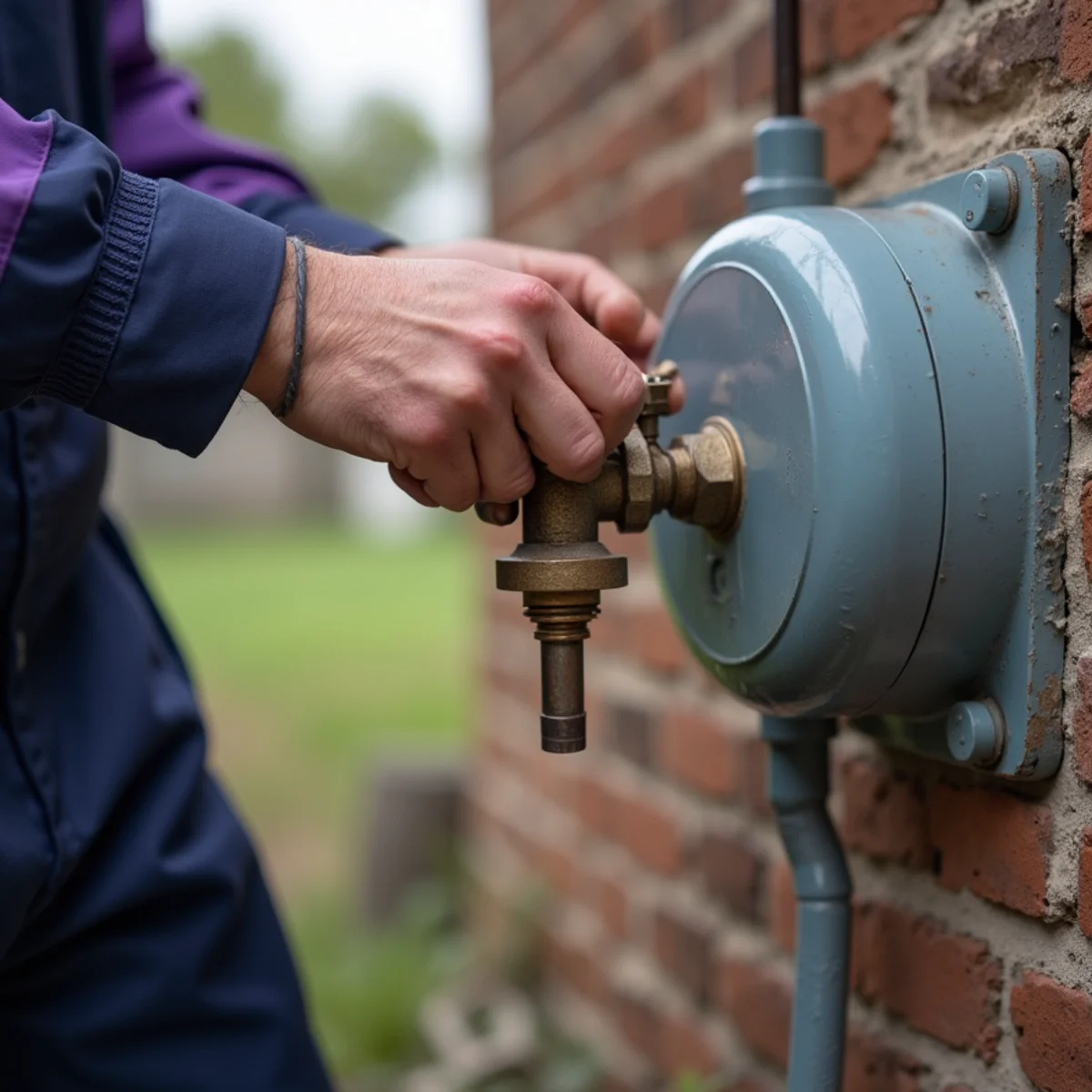
Most Grapevine homes have two places you can stop the water: a valve on the house side, usually where the main line enters the home, and the city shut-off at the meter near the street. Knowing both is useful, because one is convenient and the other is the backstop.
The house-side valve is the one you want for everyday emergencies — it is easier to reach and does not require a special tool. The meter valve at the curb is the city's connection and shuts off everything, including the line running to the house. If your interior valve is stuck, corroded, or you simply cannot find it, the meter is your guaranteed shut-off. We will cover both below.
Where the house-side valve usually hides
On a slab-foundation home — the majority in Grapevine and the mid-cities — the main shut-off is most often on an exterior wall where the water line enters the house, frequently near a front hose bib, in the garage, or in a utility closet. Walk the perimeter on the side facing the street and look for a valve on the pipe coming up out of the ground or through the wall.
Check these spots in order: the garage, especially along the wall nearest the street; near the water heater or in the utility room; an exterior wall close to the front of the house; and inside a front-yard flower bed where the pipe emerges. On older pier-and-beam homes near downtown, the valve may be in the crawl space or just inside where the supply line comes up through the floor. If a previous owner left a laminated home binder, the valve location is sometimes noted there.
Finding and operating the meter valve at the street
Your water meter sits in a buried box near the curb or sidewalk, usually with a metal or plastic lid marked 'water.' Lift the lid carefully — spiders, ants, and the occasional wasp like these boxes, so look before you reach in. Inside you will see the meter and, on the house side of it, the shut-off valve.
City-side valves are usually one of two types: a lever you rotate a quarter turn, or a slotted 'stop' that needs a water meter key — an inexpensive tool from any hardware store — turned until it stops. Do not use pliers to crank hard on a stubborn meter valve; you can break it and create a bigger problem that becomes the city's repair on their schedule, not yours. If it will not budge with reasonable effort, that is a reason to sort out your interior valve instead.
Know your valve type before you need to turn it
There are two common valve styles, and they behave differently. A ball valve has a straight lever handle; it is open when the lever lines up with the pipe and closed when you turn it a quarter turn so the lever sits across the pipe. These are reliable and quick, which is why we install them on repipes and replacements.
A gate valve has a round wheel handle you turn clockwise, often many full rotations, to close. Older Grapevine homes frequently have these, and here is the catch: gate valves seize up when they sit untouched for years, and an old one can even snap or fail to fully seal when you finally crank it in an emergency. If yours is an aging round-handle valve you have never operated, test it gently now rather than discovering it is frozen during a crisis. A valve that will not turn, leaks at the stem, or does not fully stop the water is one worth replacing before winter.
Your step-by-step shut-off drill
Do this once with everyone in the household who is old enough to help, then you will all know it:
1. Locate the house-side valve using the spots above, and locate the meter valve at the curb as your backup.
2. Identify which type each one is — lever (quarter-turn ball valve) or round wheel (gate valve).
3. Make sure you have a meter key on hand if the curb valve needs one, and keep it somewhere you will remember.
4. Test the house-side valve gently: close it, then open a sink inside to confirm the water actually stops, then reopen the valve fully.
5. Note any valve that is hard to turn, leaks, or does not fully shut the water off — that one needs attention before an emergency.
6. Tell every adult and teen in the home where the valve is and how to turn it. Shutting off water is 'righty-tighty' for a wheel, quarter-turn for a lever.
7. After you reopen the main, turn a faucet on slowly to let air burp out of the lines, then close it.
When to stop and call a plumber
Finding and testing the valve is a safe homeowner job. Replacing a seized or leaking one is where a licensed plumber earns the call. If your main valve is an old gate valve that will not turn, weeps around the stem, or fails to fully stop the water when you test it, do not force it — forcing a corroded valve can turn a dry test into a wet emergency.
Likewise, if you cannot locate any interior shut-off, or your home's only option is a stubborn meter valve, it is worth having a modern quarter-turn ball valve installed in an accessible spot. It is a small job that pays for itself the first time you need to stop water in a hurry. We are glad to add one and show you exactly how it works before we leave.
How Grapevine Heritage Plumbing Can Help
Frequently Asked Questions
For a round wheel (gate valve), turn clockwise — righty-tighty — until it stops, which can be several full turns. For a lever (ball valve), rotate it a quarter turn so the handle sits crosswise to the pipe. After any shut-off, open a faucet to confirm the water has actually stopped.
Ten quiet minutes spent finding and testing your main shut-off is some of the cheapest insurance in homeownership. When a line bursts on a freezing night or a supply hose blows off behind the washer, the people who already know where the valve is and that it turns are the ones who keep a small leak from becoming a gutted room.
If your main valve is seized, leaking, or nowhere to be found, do not wait for the emergency to sort it out. Call Grapevine Heritage Plumbing at (831) 290-4327 and we will install a reliable shut-off, show you how to use it, and make sure your home is ready to stop the water fast.