
Prevention · By Grapevine Heritage Plumbing
A hard freeze in North Texas is a specific and serious thing — a stretch where temperatures drop well below freezing and stay there long enough for still water inside pipes to turn to ice. When that ice forms, it expands, and if it has nowhere to go, it splits the pipe. The break may stay hidden until the thaw, and then it floods. Winterizing is simply making sure that never happens.
The good news is that winterizing a Texas home is cheap, fast, and highly effective when you do it right and do it in time. This is the exact step-by-step we give homeowners in Lewisville, Grapevine, and across the mid-cities when a freeze warning goes up. Follow it before the front arrives — not during — and your odds of a burst pipe drop dramatically.
Step 1: Deal with outdoor faucets and hoses first
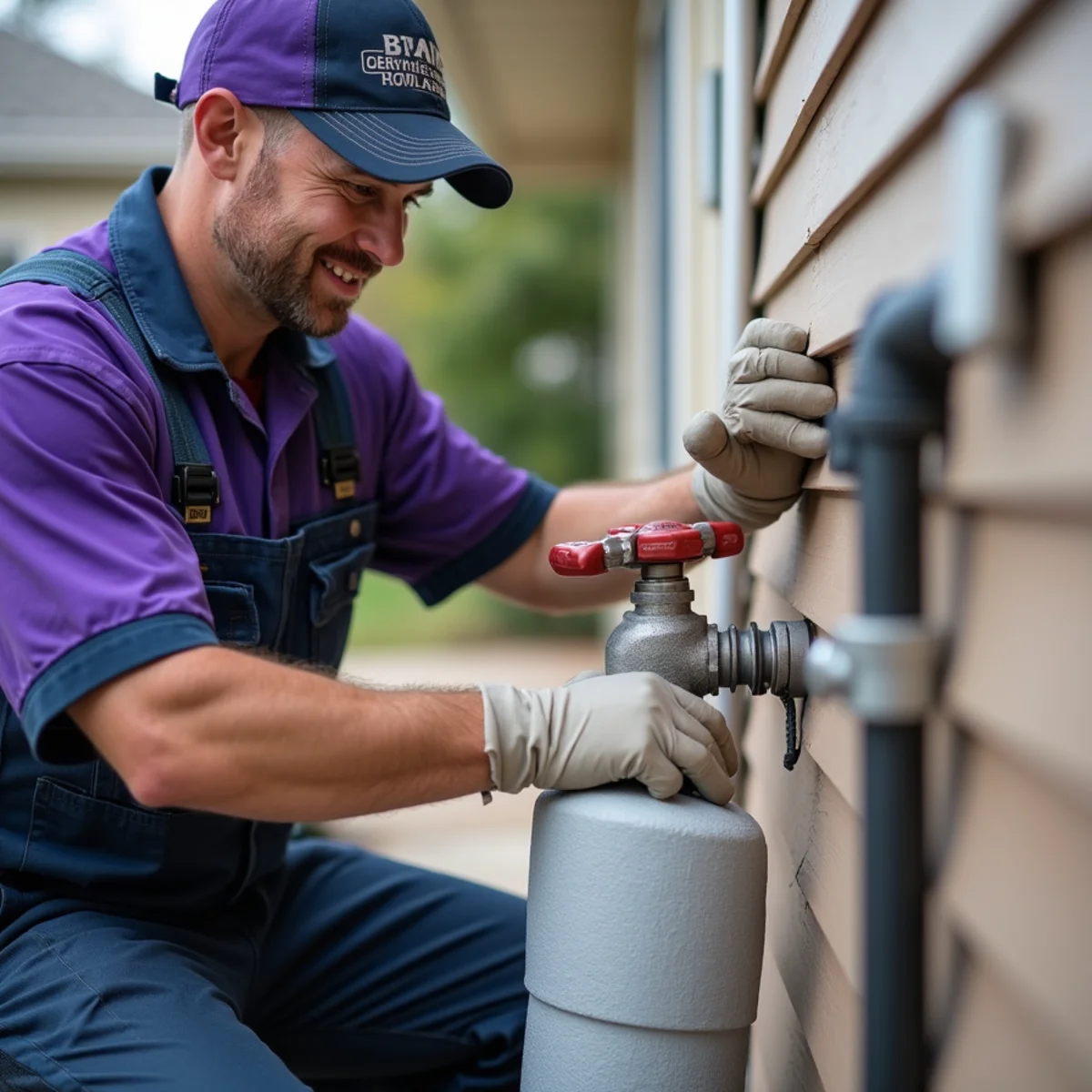
Exterior hose bibs are the number-one burst point in Texas homes, so start there. Disconnect every garden hose. A hose left attached traps water at the faucet, and when it freezes, the ice can expand back into the pipe inside your wall and split it — one of the sneakiest freeze failures because the damage is indoors.
With the hoses off, fit an insulated spigot cover over each exterior faucet. These foam or hard-shell covers cost only a few dollars and install in seconds — you just slip them over the faucet and cinch them. If you have shutoff valves that isolate the outdoor faucets from inside the house, close them and drain the exterior lines. This one step alone prevents a large share of freeze bursts.
Step 2: Insulate every exposed pipe you can reach
Walk your attic, garage, crawl space, and exterior walls and find the water lines running through them. Texas builders routinely put pipes in these unheated areas, which is exactly why our homes freeze at temperatures northern homes shrug off. Any exposed pipe in unconditioned space needs insulation.
Foam pipe insulation sleeves are the easy answer — pre-slit tubes that snap over the pipe and can be taped at the seams. Buy them in the fall, because stores sell out within hours once a freeze is forecast. For pipes in especially exposed or historically problem spots, heat tape or heat cable adds another layer of protection, but for most homes, good foam sleeves on the vulnerable runs do the job.
Step 3: Open cabinets and share the house's warmth
Pipes under sinks on exterior walls are vulnerable because the cabinet blocks your home's heat from reaching them. The fix is free: open the cabinet doors under those sinks so warm room air can circulate around the plumbing. Do this for kitchen and bathroom sinks that sit against outside walls.
Along the same lines, keep interior doors open so heat moves through the house evenly, and keep your thermostat set at a steady temperature day and night rather than letting it drop overnight. If you have pipes running near the attic, cracking the attic access can let a little house heat rise toward them. The idea is to make sure no pocket of plumbing gets isolated from the home's warmth.
Step 4: Let the right faucets drip
This is the classic Texas freeze move, and it works because moving water is far harder to freeze than still water, and a slightly open faucet relieves the pressure that actually bursts a pipe. But do it strategically. You do not need every faucet running — focus on the ones most at risk: fixtures on exterior walls and those at the far end of long pipe runs from the water heater.
A steady trickle, not a full stream, is all you need. Open both the hot and cold sides slightly so both supply lines have flow. Yes, it uses some water and it feels wrong to let it run, but during a genuine hard freeze it is cheap insurance against a repair that costs hundreds or thousands of times more. Turn the drips off once temperatures climb safely back above freezing.
Step 5: Know your shutoff and have a thaw plan
Before the freeze hits, find your main water shutoff valve and confirm it turns freely. This is the single most important piece of knowledge in a freeze, because if a pipe does burst — often on the thaw — the speed at which you kill the water determines whether you mop up a little or gut a room. Do not wait until water is pouring in to learn where the valve is.
Then think through the thaw. Remember that a frozen pipe may be split but plugged with ice, so it does not leak until it melts. As temperatures rise, walk the house and watch ceilings, walls, and the areas around vulnerable pipes for any sign of water. If you leave town during a freeze, never shut the heat off entirely, and consider having someone check the home. A house left cold and empty during a hard freeze is exactly how the worst burst-pipe stories start.
The winterizing checklist, start to finish
Run this list in order as soon as a hard freeze is in the forecast:
1. Disconnect and drain all garden hoses.
2. Install insulated covers on every exterior spigot; close and drain outdoor shutoffs if you have them.
3. Slip foam insulation over exposed pipes in the attic, garage, crawl space, and exterior walls.
4. Open cabinet doors under sinks on exterior walls.
5. Keep interior doors open and hold a steady thermostat setting day and night.
6. Set at-risk faucets — exterior walls and long runs — to a steady trickle on both hot and cold.
7. Locate and test your main shutoff valve.
8. Watch the house carefully during the thaw for hidden leaks.
How Grapevine Heritage Plumbing Can Help
Frequently Asked Questions
The general rule is to take action when temperatures are forecast to drop to around 20 degrees or below, or to stay below freezing for an extended stretch. In our exposed Texas homes it is wise to prep on the cautious side, so when a hard freeze warning goes up, run the full checklist rather than waiting to see how cold it gets.
Winterizing is not complicated and it is not expensive — it is just a handful of small steps done in the right order and, crucially, done before the freeze rather than during it. Disconnect the hoses, cover the spigots, insulate the exposed pipes, open the cabinets, drip the right faucets, and know your shutoff. That is the whole game, and it works.
If a hard freeze is bearing down and you want a hand winterizing, or a pipe has already burst and you need help now, Grapevine Heritage Plumbing answers the phone day and night through every cold snap. Call us at (831) 290-4327 and let us help you get through the freeze dry.