Core-Service · By Grapevine Heritage Plumbing
When a drain is clogged, the fix is not one-size-fits-all. The two main professional methods — cabling (snaking) and hydro jetting — work in fundamentally different ways, and using the wrong one either wastes your money or fails to actually solve the problem. Knowing the difference helps you understand what a plumber recommends and why.
The short version: a drain snake punches through a clog to restore flow, while a hydro jetter scours the entire pipe wall clean with high-pressure water. One is a targeted poke; the other is a full cleaning. Each is the right tool in different situations, and a good plumber picks based on what is actually in your pipe — which is why a camera inspection so often comes first.
This guide explains how each method works, what each is best at, and how to tell which one your drain needs. If you have ever wondered why one plumber snakes a line and another jets it, this is why.
How Drain Snaking Works
A drain snake, or auger, is a long flexible metal cable fed down the drain, often with a rotating head or cutting tip at the end. When it reaches the clog, it either breaks through the blockage or hooks and pulls it back out, restoring flow. Powered versions use a motor to spin the cable so the head can chew through tougher obstructions.
Snaking is fast, effective for many common clogs, and gentle enough for a wide range of pipes. It is the go-to for a single stopped-up fixture — a bathroom sink packed with hair, a kitchen line with a grease plug, a toilet with an object lodged in the trap. It punches a hole through the blockage and gets water moving again, which for most everyday clogs is exactly what you need.
How Hydro Jetting Works
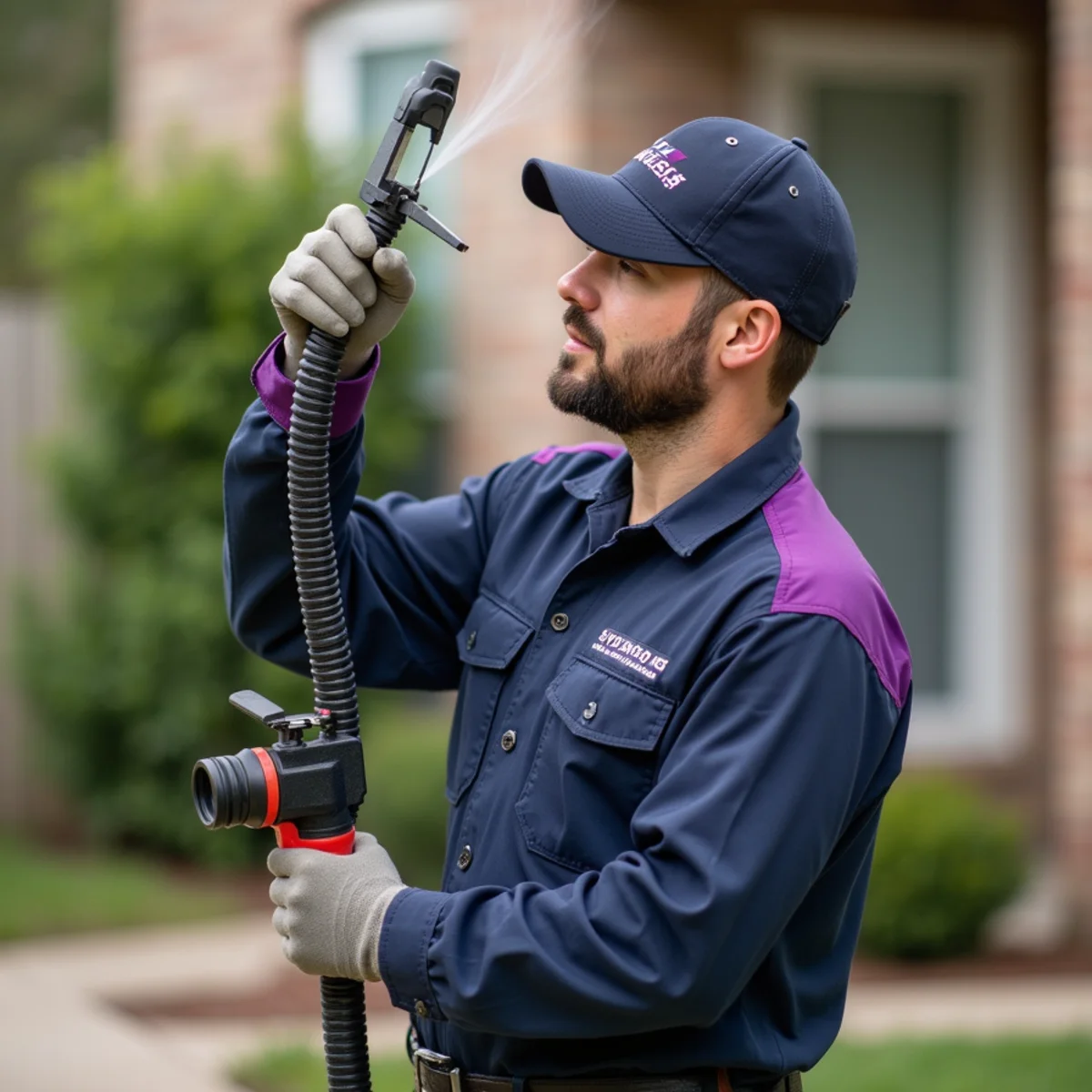
Hydro jetting uses a specialized hose and nozzle to blast water through the pipe at very high pressure — powerful enough to scour the pipe walls clean. The nozzle typically sprays forward to cut through the blockage and backward to propel itself down the line and wash debris back toward the cleanout. Instead of poking a hole through a clog, jetting removes the buildup entirely, all the way around the pipe.
That is the key difference. A snake clears a path through the clog; a jetter cleans the whole pipe. Jetting can strip out years of accumulated grease, sludge, mineral scale, and even cut through root intrusions, leaving the interior close to its original diameter. It is the more thorough method — and for certain problems, the only one that truly solves them.
When Snaking Is the Right Call
Snaking is often the better choice for a single, localized, simple clog — a lone slow or stopped fixture where you just need to restore flow quickly and economically. If a hairball has your shower draining slowly or a wad of something is stuck in a toilet trap, a snake handles it directly and inexpensively.
It is also the safer choice for older or more fragile pipe. On aging galvanized lines or pipes a plumber suspects may be in poor condition, the high pressure of hydro jetting can be too aggressive and risk damaging an already-weak pipe. A snake is gentler in those situations. Snaking is frequently the right first response to a straightforward stoppage — it is quick, targeted, and does not overcommit you to a bigger service than the problem warrants.
When Hydro Jetting Is Worth It
Hydro jetting earns its place on the tougher, deeper problems. It shines on recurring clogs — if a line keeps backing up no matter how many times it is snaked, that is a strong sign the pipe walls are coated in buildup that only a full scouring will remove. Snaking clears the immediate blockage but leaves that coating behind, so the clog returns; jetting removes the cause.
It is also the method of choice for heavy grease accumulation in kitchen lines, significant mineral scale (a real factor with our hard Tarrant County water), main sewer lines with years of sludge, and root intrusion. Roots love the moisture and the joints in older clay and cast-iron sewer pipe common under mid-cities homes, and while a snake can cut a hole through a root mass, jetting can scour far more of it out and restore the line's capacity. For a full main-line cleaning or a chronic problem, jetting is usually the more lasting investment.
Why a Camera Inspection Comes First
The reason a good plumber does not just guess between the two is that the right choice depends on what is actually inside your pipe — and you cannot see that from the fixture. A sewer camera inspection sends a waterproof camera down the line so we can see exactly what we are dealing with: a simple clog, heavy grease, roots, scale, a bellied section of pipe, or a crack or collapse.
That inspection prevents two expensive mistakes. It stops us from jetting a fragile or broken pipe that cannot handle the pressure, and it stops us from repeatedly snaking a line whose real problem — roots or a collapse — a snake will never fix. It also confirms the job is actually done afterward. For any recurring or serious drain problem, camera-first is simply the honest way to work; it is how you match the method to the real condition instead of selling a service and hoping.
The Bottom Line for Grapevine Homeowners
Neither method is universally better — they solve different problems. For a single simple clog or a fragile older pipe, snaking is often the smart, economical first move. For recurring clogs, heavy grease or scale, root intrusion, or a full main-line cleaning, hydro jetting is the thorough solution that actually removes the cause instead of just poking through it.
In our area specifically, two local factors tilt more jobs toward jetting than you might expect: the hard water that leaves mineral scale inside pipes, and the mature trees whose roots seek out the older sewer lines under many mid-cities homes. That said, the right answer is always the one that fits your pipe's actual condition — which is exactly why we inspect before we recommend, and never push a bigger service than your drain needs.
How Grapevine Heritage Plumbing Can Help
Frequently Asked Questions
No — they solve different problems. Snaking is often the smarter, cheaper choice for a single simple clog or for fragile older pipe that high pressure could damage. Hydro jetting is the better investment for recurring clogs, heavy grease or scale, root intrusion, or a full main-line cleaning, because it removes buildup entirely instead of just punching through it. The right method depends on what is actually in your pipe.
Choosing between hydro jetting and snaking comes down to matching the tool to the problem: a snake punches through a localized clog, while a jetter scours the whole pipe clean of grease, scale, and roots. For simple or fragile-pipe situations, snaking is often the right and economical call; for recurring, heavy, or root-driven problems, jetting is the lasting fix. Our hard water and root-friendly clay soil push more mid-cities drains toward jetting than average.
Not sure which your drain needs? That is exactly what a camera inspection settles. Call Grapevine Heritage Plumbing at (831) 290-4327 and we will look inside your line, recommend the method that actually fits, and clear your drain the right way the first time.