Emergency · By Grapevine Heritage Plumbing
Losing hot water is one of those problems that goes from minor annoyance to household emergency the moment someone has to shower before work in a cold Grapevine winter. The reassuring part is that a water heater usually fails in predictable ways, and a few of the causes are things you can safely check yourself in a couple of minutes.
This guide walks through the common reasons a water heater stops delivering hot water, what you can check on your own, and — just as importantly — where the line is between homeowner troubleshooting and a job that needs a licensed plumber. Some of these checks are simple. Others involve gas and high-temperature water, and there is no shame in calling before you touch them.
Start by figuring out what kind of heater you have: a gas tank (it has a burner and usually a pilot or igniter at the bottom), an electric tank (it connects to the breaker panel, no flame), or a tankless unit mounted on a wall. The fix depends on which one you own.
First, Check for a Leak or Emergency
Before any troubleshooting, look at the tank and the floor around it. If you see water pooling under the heater, hear a hiss, or smell gas, treat it as an emergency. A leaking tank can fail suddenly and dump 40 to 50 gallons onto the floor, and a gas smell means you should stop, leave the area, and call from outside.
For a clear leak, shut off the water supply to the heater using the valve on the cold line at the top of the tank, and cut the power or gas to the unit. Then call us. A tank that is actively leaking is not a troubleshoot-it problem — it is usually a replacement.
If You Have a Gas Water Heater
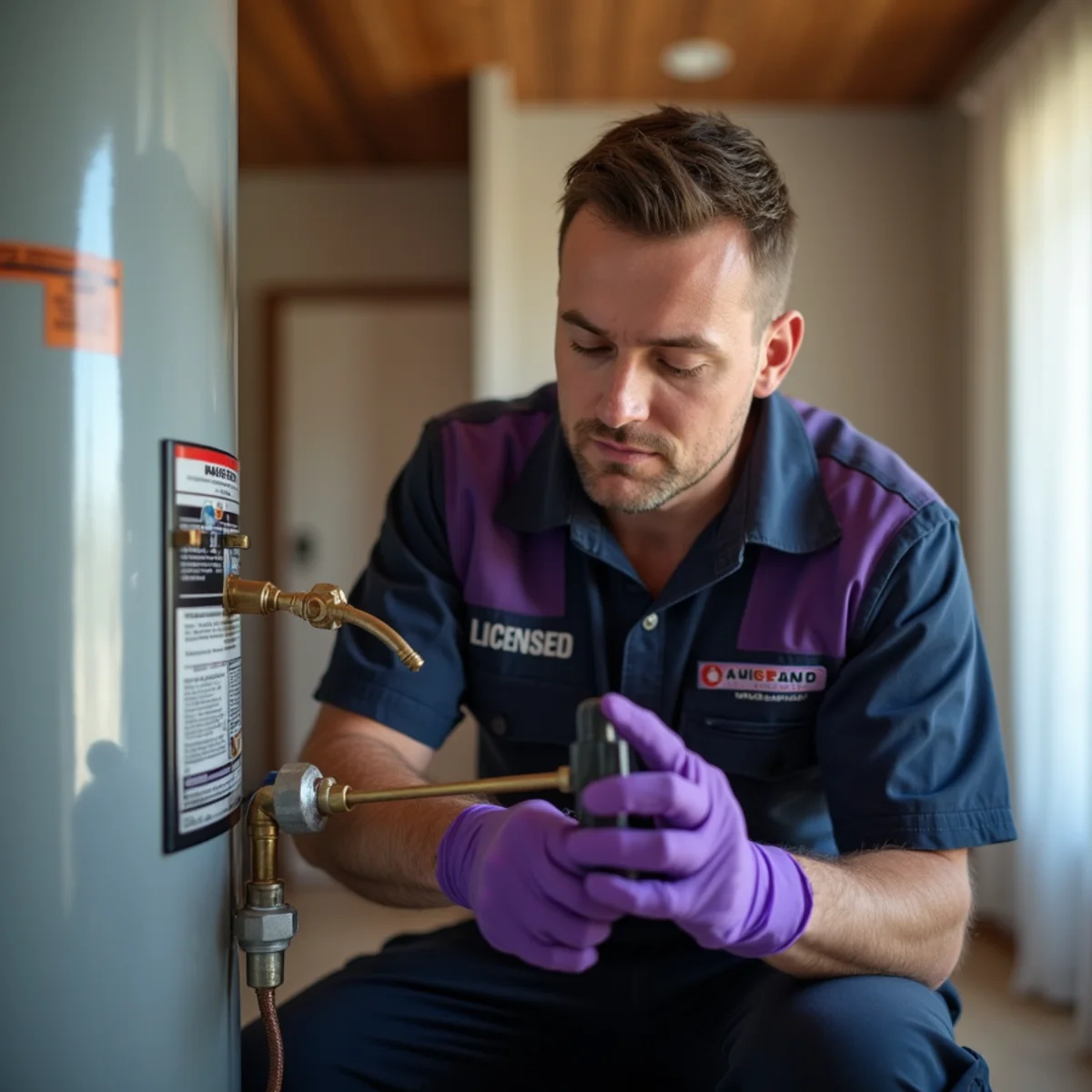
The most common cause of no hot water on a gas tank is a pilot light or igniter that has gone out. On older units, look through the small window near the bottom for a small flame. If it is out, most heaters have printed relighting instructions on a label — the general sequence is to turn the gas control to off, wait several minutes for any gas to clear, then follow the unit's steps to relight. If you do not smell gas and are comfortable following those instructions, it is a reasonable thing to try.
If the pilot will not stay lit after a couple of tries, stop. A pilot that lights and then dies usually points to a failing thermocouple or gas valve — parts that a plumber should replace. Repeatedly trying to force it is not worth the risk.
Also check that the gas is actually on. If other gas appliances in the house — a range or furnace — are also out, the problem may be a supply issue with Atmos Energy rather than your heater, and you would contact them.
If You Have an Electric Water Heater
For an electric tank, start at the breaker panel. A tripped breaker is a frequent and easy cause — flip it fully off, then back on. If it trips again immediately, do not keep resetting it; that points to an electrical fault or a failed heating element, and it needs a professional.
Electric heaters also have a high-temperature reset button, usually a red button on the upper thermostat behind an access panel. Pressing it can restore heat if a safety cutoff tripped. But if the reset trips again, or you are opening panels near live wiring and are not certain what you are looking at, that is your cue to call. Electric heater elements and thermostats are common failures and straightforward for a plumber to replace.
If You Have a Tankless Unit
Tankless heaters show an error code on a small display when they fault, and that code is genuinely useful — write it down before you do anything else, because it tells the technician exactly what the unit is complaining about. Many faults clear with a simple power cycle: turn the unit off, wait a minute, and turn it back on.
Here in Tarrant County, one tankless issue is common enough to call out: hard water scale. Our water runs roughly 8 to 12 grains per gallon, and mineral buildup on the heat exchanger is a leading reason tankless units start underperforming or throwing errors. If your tankless heater has never been descaled, that maintenance is often the fix — and something to schedule annually going forward.
Lukewarm, Not Cold? The Clues Are Different
If you have some hot water but it runs out fast or never gets truly hot, the culprit is usually different from a total outage. On a tank heater, a thermostat set too low, a single failed heating element (electric units have two), or a tank full of sediment are the usual suspects.
Sediment is the local one worth understanding. Hard-water minerals settle to the bottom of the tank and bake into a crust over the burner or lower element, insulating the water from the heat and shrinking your effective tank capacity. That is why a heater that gave you 50 gallons of hot water new might give you 30 after several years in North Texas. Flushing the tank periodically slows it down, but a heavily scaled, aging tank is often near the end of its life.
When to Stop and Call a Plumber
Call a licensed plumber if you smell gas, if the tank is leaking, if a breaker or pilot will not stay on after one careful reset, or if you are simply not comfortable working around gas or electrical components. None of that is a failure on your part — water heaters combine gas, electricity, pressurized water, and high temperatures, and a wrong move has real consequences.
When you call, tell us the heater type, the age if you know it, any error code on the display, and exactly what is happening — no hot water, lukewarm, or a leak. That gets the right parts on the truck the first time. We will diagnose whether it is a repair or a replacement and give you an honest recommendation, not a reflexive upsell.
How Grapevine Heritage Plumbing Can Help
Frequently Asked Questions
You can try relighting once, following the instructions on the unit, if you do not smell gas. But a pilot that lights and then dies usually means a failing thermocouple or gas valve. Relighting it repeatedly does not fix the underlying part and is not worth the risk — have a plumber replace the component.
No hot water almost always traces back to a short list: a leak, a lost pilot or tripped breaker, a failed element or thermocouple, or hard-water sediment. A couple of those you can safely check in minutes. The rest — anything involving gas, active leaks, or repeated tripping — is where a licensed plumber earns the call.
If your Grapevine home is out of hot water and the simple checks did not solve it, do not tough out cold showers. Call Grapevine Heritage Plumbing at (831) 290-4327 and we will diagnose it fast and get the hot water back on.