
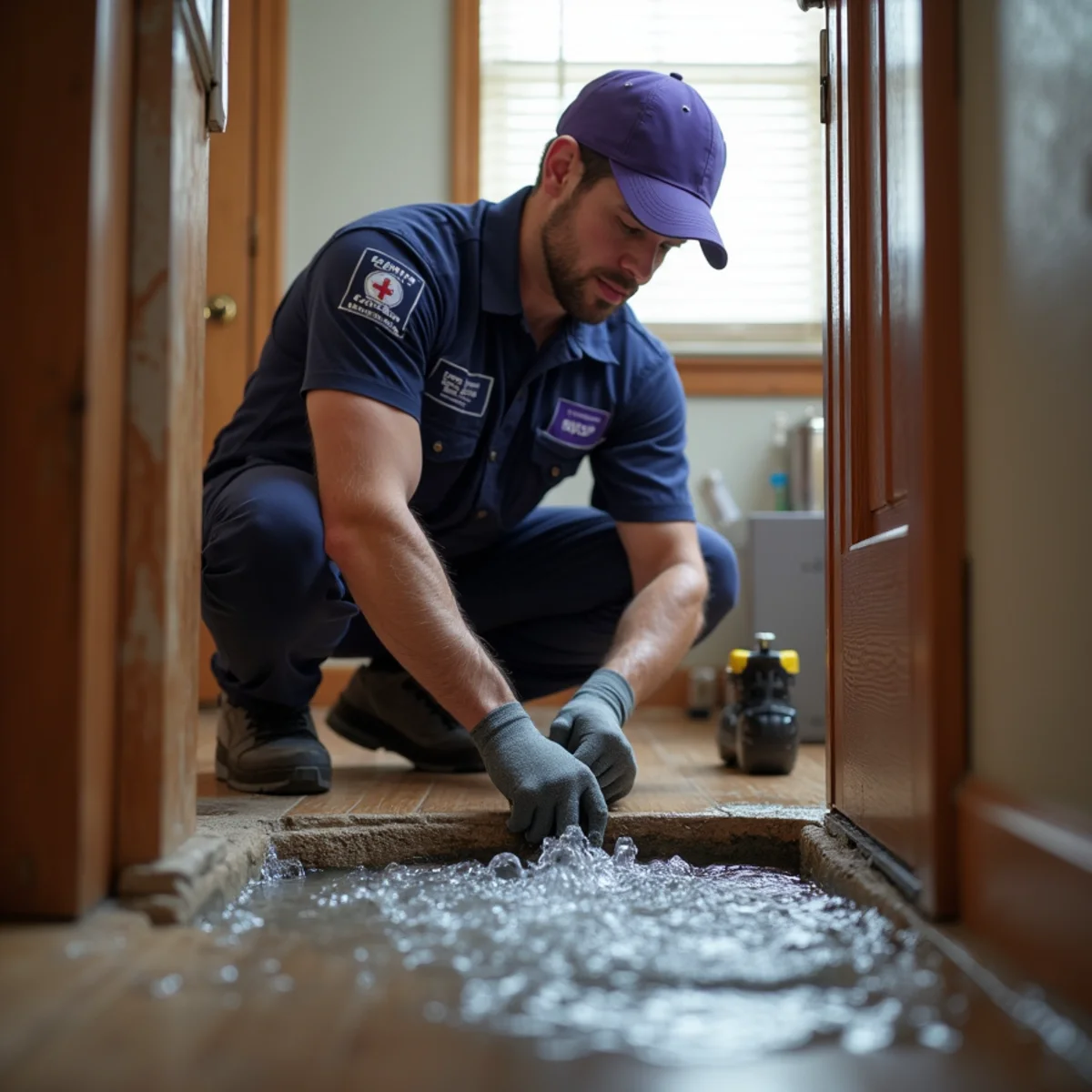
Emergency · By Grapevine Heritage Plumbing
There is a particular kind of dread that comes with hearing a downstairs toilet gurgle while rain hammers the roof — and then watching dark water rise in the tub or floor drain. A sewer backup during a storm is one of the most stressful plumbing failures a homeowner can face, because it is unsanitary, it moves fast, and it feels like there is nothing you can do about it.
There is actually quite a bit you can do, and understanding why it happens makes the right response obvious. Storm-driven backups are common across Tarrant County, and they behave differently from an ordinary clog. Treating them like a routine stoppage can make the situation worse.
This guide walks through what is happening under your yard, how to keep your family safe, and when to call for help.
Why Storms Cause Sewage to Back Up
When several inches of rain fall fast on already-saturated North Texas clay, the water has nowhere to soak in. In many older neighborhoods, groundwater and stormwater find their way into the sanitary sewer system through cracked pipes, loose joints, and aging manholes — a problem utilities call inflow and infiltration. The sewer main, sized for household waste, suddenly has to carry many times its normal volume.
When the main fills faster than it can drain, the excess has to go somewhere, and the path of least resistance is back up the branch lines toward homes. This is sometimes called a surcharge condition. The water rises to the lowest open drain in the lowest home on the line — often a basement floor drain, a downstairs shower, or a first-floor tub — and comes back in.
That is the key distinction: a storm surcharge is not necessarily a clog in your line. It can be the public system pushing back against you. That changes how you respond and, often, who is responsible for the fix.
First: Stop Using Water Immediately
The instant you see or smell a backup, stop running water anywhere in the house. Do not flush toilets, run the dishwasher or washing machine, or take a shower. Every gallon you send down the drain adds to what is already backing up into your lowest fixtures.
Tell everyone in the household to hold off until the situation is assessed. During a storm surcharge, water you use upstairs can literally come back out downstairs. Cutting off inflow buys time and keeps the mess from spreading.
Protect Yourself From Contaminated Water
Sewage backup water is not just dirty — it carries bacteria, viruses, and parasites, and it is a genuine health hazard. Keep children and pets well away from any affected area. If you have to be near it, wear rubber boots, waterproof gloves, and eye protection, and wash thoroughly afterward.
Do not touch electrical outlets, switches, or appliances that are wet or standing in the water. If sewage has reached outlets or your electrical panel, shut off power to that area at the breaker only if you can do so without standing in the water — otherwise stay clear and call an electrician.
Open windows for ventilation if the weather allows, and keep the affected area sealed off from the rest of the house. Porous items the water has touched — rugs, cardboard, drywall bottoms — often cannot be salvaged, but do not start hauling things out until you have documented the damage.
Document Everything for Your Claim
Before cleanup begins, photograph and video the backup: the affected fixtures, the standing water and how high it reached, and every damaged item. Note the date, the storm, and roughly when it started.
Sewer backup coverage is often a separate rider on Texas homeowners policies, not part of the standard water-damage coverage, so check your declarations page. Whatever your coverage, thorough documentation makes the claim smoother, and a written diagnosis from a licensed plumber helps establish cause.
Call a Licensed Plumber to Diagnose the Cause
Once your family is safe and water use has stopped, call a plumber to determine whether this was a public-system surcharge, a blockage in your private lateral, or both. The tool for that answer is a sewer camera — we run it down the line to see exactly what is happening and where the water is coming from.
If your lateral is clear and the backup traces to the public main, that points toward the utility. If we find roots, a collapse, or a grease blockage in your line, that is a repair on your side — and one worth addressing before the next storm. Either way, you get a clear picture instead of a guess.
We will also talk with you about prevention. The most effective safeguard against storm backups is a backwater valve installed on your sewer lateral — a one-way flap that lets waste flow out but slams shut when the main tries to push sewage back in. In backup-prone Tarrant County neighborhoods, it is one of the best plumbing investments a homeowner can make.
How to Reduce Your Risk Before the Next Storm
You cannot control how much rain falls on the mid-cities, but you can make your home a harder target. A properly installed backwater valve is the biggest single step, and it pays for itself the first time it saves you from a flooded downstairs.
Beyond that, keep your own lateral healthy: have it camera-inspected if you have mature trees whose roots love our clay soil and the moisture around old clay pipe, clear grease and wipes out of your habits before they build up inside the line, and address slow drains early rather than waiting for a storm to expose them. A line already half-choked with roots has far less capacity to spare when the system surges.
How Grapevine Heritage Plumbing Can Help
Frequently Asked Questions
It depends on where the problem is. If your private lateral is blocked by roots, grease, or a collapse, that is your repair. If the public main surcharged and pushed sewage back through a clear lateral, responsibility may fall to the utility. A sewer-camera inspection is how we tell the two apart, and that footage supports your case either way.
A storm sewer backup is frightening, but the response is straightforward: stop using water, keep everyone away from the contaminated area, document the damage, and get a licensed plumber to camera the line and tell you exactly what happened. Knowing whether it was your lateral or the public main is the difference between fixing the right problem and fixing nothing.
If sewage is coming up in your home right now, do not wait it out. Call Grapevine Heritage Plumbing at (831) 290-4327 and we will get a technician to you, find the cause, and help you keep it from happening again.