Local · By Grapevine Heritage Plumbing
If you have lived in Grapevine or anywhere in Tarrant County for a few summers, you have seen it: the ground cracks open into a jigsaw of deep fissures during a dry August, then swells back solid after a soaking spring rain. That dark, sticky soil is Blackland Prairie clay, and it is the reason so many of the plumbing problems we fix here trace back to the dirt itself.
Homeowners often assume a cracked pipe or a slab leak is a workmanship or age problem. Sometimes it is. But in this county, the soil deserves a big share of the blame. Understanding how expansive clay moves — and moves your pipes with it — helps you know why these failures happen, why they cluster in certain seasons, and what actually protects your home. This is not sales talk; it is the ground truth under your foundation.
What makes our clay 'expansive'
Blackland Prairie soils, along with the Eagle Ford clays that underlie parts of the region, are rich in a mineral family that absorbs water into its very structure. When it rains, the clay does not just get wet — it physically swells, expanding in volume. When it dries out, it contracts and pulls apart. Geologists call this shrink-swell behavior, and North Central Texas has some of the most active expansive soil in the country.
The movement is not subtle. Across a wet-to-dry cycle, the ground surface can rise and fall by inches. Your house, its slab, and every pipe buried in that soil are riding on a surface that is constantly heaving and settling. Rigid materials do not enjoy that ride.
How that movement breaks pipes
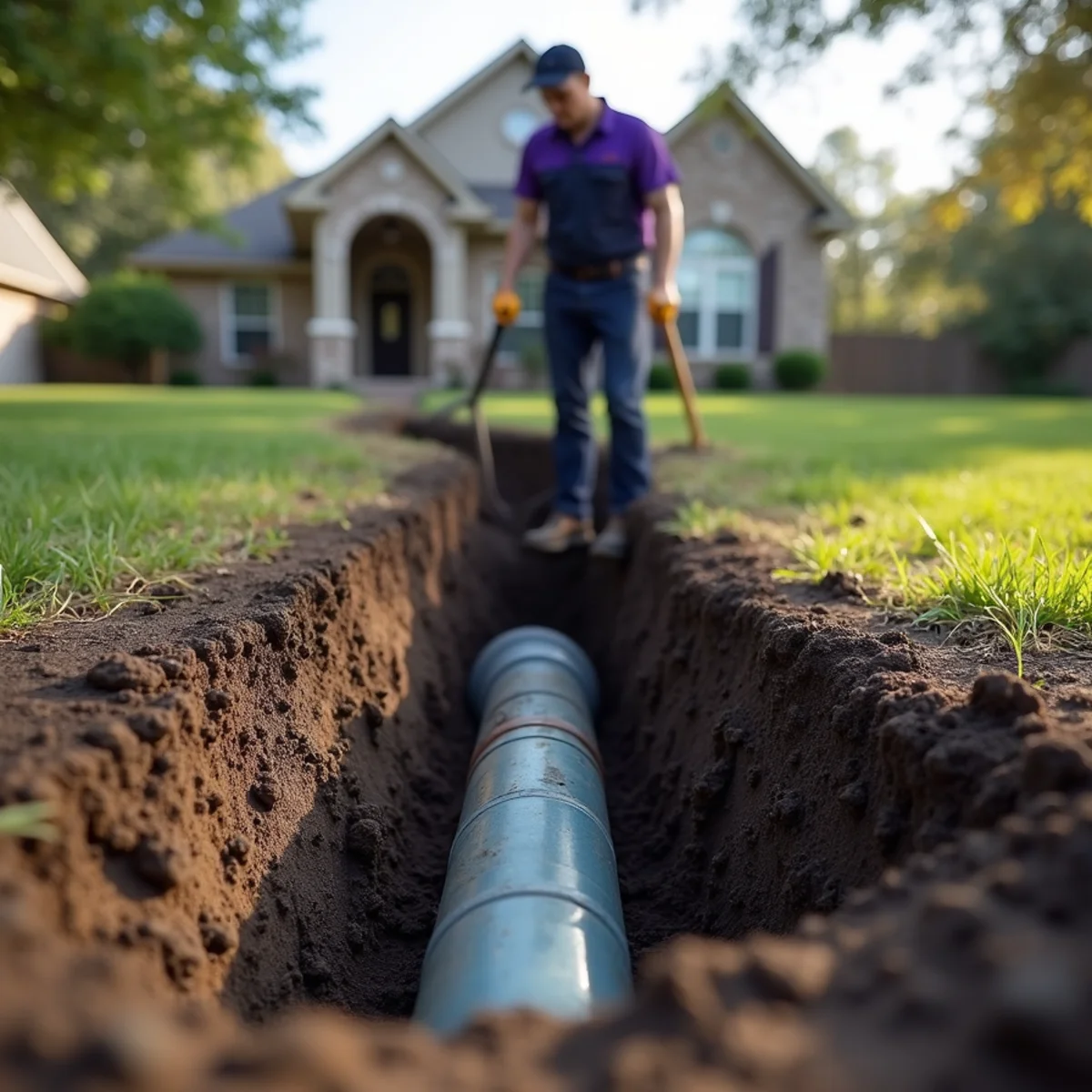
Water and sewer lines under your home are largely rigid — copper, cast iron, older clay tile sewer pipe, and PVC. When the surrounding soil swells on one side and shrinks on another, it applies bending and shearing forces to those pipes. Over enough seasonal cycles, something gives: a joint pulls apart, a length of pipe cracks, or a line rubs against an aggregate and wears a hole.
Sewer laterals are especially vulnerable because they run long, gradual distances under the yard and slab. A section that shifts even slightly can lose its slope, causing repeated backups, or crack at a joint and let roots and soil intrude. On the supply side, the same movement stresses copper until a pinhole or split appears — the classic under-slab leak.
Why the worst failures cluster in drought and after freezes
The most damaging soil movement happens at the extremes. During a long, hot Texas drought, the clay shrinks aggressively and pulls away from foundations and pipes, sometimes leaving visible gaps at the slab edge. That withdrawal drops support out from under lines and lets them sag and crack. Then the first heavy rain swells everything back, slamming the pipes in the other direction.
Drought years, in particular, tend to produce a wave of slab-leak and foundation calls across the mid-cities. Add a hard freeze like 2021's Winter Storm Uri on top of already-stressed lines, and marginal pipes that had been holding on finally let go. The soil sets the stage; the weather extremes pull the trigger.
The homeowner's role: managing moisture
You cannot change the geology, but you can reduce how violently the clay around your home swings between wet and dry. The single most useful strategy is keeping soil moisture as even as possible around the foundation, especially through drought.
That means running soaker hoses a foot or two out from the slab during dry spells to keep the clay from shrinking away, directing gutters and downspouts to carry roof water well away from the foundation so it does not pool and over-swell one side, and being mindful of large trees whose roots pull enormous amounts of moisture from the soil near your house. Even, controlled moisture keeps the ground — and your pipes — from taking the full brunt of the shrink-swell cycle.
How we build plumbing to survive expansive soil
When we repair or reroute lines in this soil, we plan for movement instead of pretending it will not happen. Where it makes sense, we favor materials and connections that tolerate flex better than old rigid runs. On repipes and reroutes, we can move vulnerable supply lines out of the slab and into accessible overhead or attic paths, so the next round of soil movement cannot break them and any future repair does not require jackhammering concrete.
For sewer lines, camera inspection tells us whether we are dealing with a single failed joint or a line that clay movement has compromised end to end — and that determines whether a spot repair or a full replacement is the honest recommendation. The goal is always to fix the problem in a way that stands up to the next dry summer, not just to make it stop leaking for a season.
Warning signs your soil is stressing your plumbing
Watch for these local red flags and get them checked before they escalate:
1. New cracks in interior drywall, tile, or brick, especially in a stair-step pattern.
2. Doors and windows that begin sticking seasonally as the house shifts.
3. Gaps opening between the soil and the foundation during dry spells.
4. Recurring sewer backups that clear and then return — a sign of a line that has lost slope.
5. A rising water bill or a warm floor spot pointing to a supply-side slab leak.
6. Uneven or bouncing floors that were solid when the home was newer.
How Grapevine Heritage Plumbing Can Help
Frequently Asked Questions
Yes. The Blackland Prairie and Eagle Ford clays that underlie Grapevine and most of Tarrant County are among the most expansive soils in the nation. Their seasonal shrink-swell movement is a leading cause of local slab leaks, sewer breaks, and foundation issues.
The black clay that grows beautiful lawns across Tarrant County is also quietly working against the pipes beneath your home, flexing them season after season until something cracks. It is not a flaw in your house — it is the nature of the ground we build on, and it is manageable once you understand it.
If you are seeing the warning signs of soil-driven plumbing trouble, or you just want lines that are built to survive the next dry summer, Grapevine Heritage Plumbing knows this dirt. Call us at (831) 290-4327 and let us help you get ahead of the clay instead of chasing it.